Polish Greatness (Blog) is devoted to promoting Polish History, and gives tribute to the Polish Armed Forces past and present for their Courage, Honour and Sacrifices.
Showing posts with label 27th Polish Home Army Infantry Division. Show all posts
Showing posts with label 27th Polish Home Army Infantry Division. Show all posts
German envoys have proposed capitulation of the Czerniakow district. Poles refused to concede but have called for a cease-fire to allow civilians and the injured to evacuate the area. Soviet Command of the First Division have promised Polish defenders assistance for the evacuation to the right bank of the Vistula. Still, no rescue attempt has been forthcoming. Many insurgents had attempted to swim across the Vistula while others fought their way towards City Centre Sector Centre, but without success. Meanwhile Captain Ryszard Bialour "Jerzy" and Major Stanislaw Latyszonek had decided to break through to Srodmiescie South. German units under the command of General Heinz Rohr have launched an all-out general attack on the district of Mokotow.
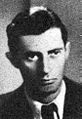
Witold Pawel Szredzi
Major Witold Pawel Szredzi, code name "Sulima" was the Commander of the Grodek Jagiellonski Inspectorate in September 1943 and the leader of the "San" group during Operation Tempest, In August 1944 Szredzi led the same group beyond the river San, but on August 16 was summoned to Warsaw by the Home Army Commander. As he led his troops back to the beleaguered city, Soviet units surrounded Szredzi and his men, but Szredzi managed to escape capture. Upon reporting to the "Warta" units he took command of Battalion "C" (Postcript: On June 1, 1946 he was arrested by the WSR (Pol. Wojskowy Sad Rejonowy - Regional Military Court) in Wcroclaw and sentenced to death, but it was then changed to 15 years imprisonment. He was released on May 1, 1956.
These military courts were established under the decree of the PKWN, the Soviet-backed Polish Committee of National Liberation. They are authorized to investigate so-called "crimes of state" and have arrested hundreds of officers of the Polish Home Army on trumped up charges. (By the end of the war, and into the early years of the Cold War, the WSR will have issued about 3,500 death sentences, with more than 1,300 executions carried out.)
Stefan Rowecki
Operation Tempest, or Operation Storm (Akcja Burza) was the plan of General Stefan Rowecki, Chief of the Home Army, to instigate an uprising against the Germans. It took place in three stages: first in the eastern frontier, with main attacks at Lviv and Vilnius the second stage between the Curzon Line and the Vistula River followed by the third stage over the rest of Poland. The plan entailed cooperation with the Red Army on a tactical level. Polish Home Army units planned to precede the advancing Red Army in liberating German occupied territories but the lack of Soviet assistance and the overwhelming military might of the German Wermacht put an end to Operation Storm.
In 1941 Rowecki organized large-scale sabotage operations against the Germans in territories east of the Polish borders Wachlarz. On June 30, 1943 he was arrested by the Gestapo in Warsaw and sent to Berlin. There, he was interrogated by prominent Nazi officials such as Ernst Kaltenbrunner, Heinrich Himmler and Heinrich Muller. They offered him an "anti-bolshevik alliance" but Rowecki refused. He was executed sometime in August 1944 by the Nazi Sachsenhausen.
Ludwik Kalstein
Blanca Kaczerowska
Rowecki's arrest was due to the betrayal of Ludwik Kalstein "Hanka", Eugeniusz Swierczewski "Genes" and Blanca Kaczerowska "Sroka". They were both members of the Polish Armia Krajowa (Home Army) but secretly collaborated with the Gestapo. The Secret War Tribunal of the Polish Secret State sentenced them to death for high treason. The execution of Swierczewski was carried out by Polish troops under the command of Stefan Rys "Jozef"; Swierczewski was hanged in the basement of the house at 74 Krochmalna Street in Warsaw. Kalkstein could not be harmed as he was under the protection of the Gestapo. He fought in a unit during the Warsaw Uprising under the name of Konrad Stark. After the war he worked for the Polish Radio station in Szczecin and was later recruited as an agent by the Urząd Bezpieczeństwa. In 1982 he emigrated to France; he died in 1994. The death sentence against Blanka Kaczorowska was not carried out because she was pregnant at the time. After the war she also worked as a secret agent for the Urząd Bezpieczeństwa and later for the renamed Służba Bezpieczeństwa. She emigrated to France in 1971. On January 2, 1944 Russian forces of the 2nd Belarusian Front crossed Poland's prewar border. During that time, Polish civilians were being massacred at Volhynia. The massacres were carried out by the Ukrainian Insurgent Army (UPA) in Eastern Galicia and Volhynia in July and August of 1943. UPA Commander Dmytro Klyachkivsky ordered that all Polish males between the ages of 16 and 60 be liquidated but most of the victims were women and children. By the end of the bloodletting, between 40,000 to 60,000 Polish civilians were slaughtered in Eastern Galicia and between 2,000 to 3,000 in Volhynia. The Bandera faction of the Organization of Ukrainian Nationalists were responsible for the killings. Their objective was to purge all non-Ukrainians from a future Ukrainian State. A Ukrainian Orthodox Pope gave this blessing to his congregation in Volhynia in 1943: "Fellow Christians-Ukrainians! Butchering the Poles is your duty, and there will be independent Ukraine. ... and on that slaughter I bless you."
Polish Victims of the Volhynia Massacre July - August 1943
During the massacres, the 27th Polish Home Army Infantry Division was formed to help in local self-defense of Polish residents and to fight against the Ukrainian Insurgent Army and German Wermacht. Despite orders by the Polish government not to harm Ukrainian civilians, the Polish Home Army conducted retaliatory strikes against villagers, burning down Ukrainian houses and killing ethnic Ukrainians.
The Polish Division was the largest partisan unit in central Europe numbering about 7,300 soldiers, officers, and NCOs. Hence Operation Storm was put into action. Joint Polish-Soviet units succeeded in recapturing Kowel (on April 6) and Wlodzimierz. After reaching the front line, the Soviet proposed that the Polish Divison be combined with that of the Soviet Red Army. Polish Colonel Jan Kiwerski "Olivia" refused and his Division returned to partisan fighting. Over the span of two weeks, German troops virtually decimated the Polish army. Though the Soviet promised to provide help, none ever came. Polish casualties reached up to 50 %.
Polish troops had to retreat westward and were attacked by not only German forces but Soviet forces as well. Polish soldiers were taken prisoner by the Soviets and given the "choice" of joining the Red Army or being deported to Soviet gulags. Only a small number joined the Soviet army. Remnants of the Polish Division made it across the Bug River on June 7 and linked up with other Home Army units. Together they took part in the liberation of Kock, Lubartow and Firley on July 21, 1944.
(1/5) Timewatch Battle for Warsaw World War II (10:01m)
(2/5) Timewatch Battle for Warsaw World War II (10:00m)
(3/5) Timewatch Battle for Warsaw World War II (10:01m)
(4/5) Timewatch Battle for Warsaw World War II (10:01m)
(5/5) Timewatch Battle for Warsaw World War II (08:23m)
Since the end of the September Campaign of 1939, the Polish Underground was already planning for an uprising against the German occupiers. It was to begin only once the Allies were approaching Warsaw, and when Germany's defeat was imminent. Poland's freedom and independence relied entirely on Allied support and cooperation and the Polish government-in-exile had no doubt that the British government was true to its word. According to the Agreement between the two countries, signed on August 25, 1939, both pledged to provide one another with all their support in the event of hostilities from another Power.
The Polish government-in-exile made numerous attempts to confer with Britain on laying the groundwork for a future offensive. Churchill gave the Poles every assurance that Britain would defend Poland at the crucial time. But unbeknownst to the Polish government, England had a hidden agenda. A British Chiefs of Staff report disapproved of any military action taken by Poland because, " it would be politically unacceptable [for Poland] to undertake any such measures without the approval and cooperation of Russia." Furthermore the report made a recommendation that this policy not be mentioned to Poland.
The Home Army sent frequent messages to London requesting that Polish military units be deployed to Warsaw, including their own 1st Polish Independent Parachute Brigade. Britain had control of almost all Polish military troops on land, sea, and air. The Polish request was denied. Churchill applied considerable pressure on the Polish government to give their consent to deploy the Parachute Brigade for battle in the D-Day operations. In exchange, Churchill promised that England would provide assistance in the Uprising, and make “every effort to find aircraft to transport the brigade to Poland.
On August 1, at 5:00 p.m. over 50,000 Polish underground fighters, under the command of Colonel Monter began conducting assaults on German positions, simultaneously all over Warsaw. Only 10% of the Home Army was sufficiently armed. They had the support and cooperation of numerous other underground regiments: the National Armed Forces (NSZ), the Polish People's Army (PAL), the People's Army (AL), and the Security Corps (KB), in addition to numerous partisan groups. Facing them was the German Wermacht comprising 70,000 soldiers backed by bombers and tanks. Before August 3, the Polish fighters successfully captured a series of complexes in Warsaw's most important boroughs: Srodmiescie, Powisle, part of Czerniakow, Zoliborz, Mokotow, the Old Town, Wola, Sadyba, and parts of Ochota and Praga. The Poles made significant advances but could not overtake all the German
strongholds for lack of ammunition.
On August 3, Stalin promised the Polish Prime Minister Wladyslaw Mikolajczyk that the Red Army would fight the Germans if the uprising would last for at least 6 days. The Uprising lasted for all of 63 days, but the Soviets did nothing to help the Polish fighters.
On August 8 and 9, Churchill pressured Air Marshal Slessor to resume flights, but this time using only Polish crews. The drops were successful and throughout the next week 90 more Polish, British, and South African crews flew over the Warsaw area dropping supplies and ammunition. But by the end of the week it was too late. The Germans had reinforced their anti-aircraft defenses. Seventeen of the ninety planes were shot down, others were severely damaged. Many of the supplies that were air dropped, landed in German-controlled areas. British Command denied further requests by Polish airmen to fly to Warsaw.
Polish Home Army Captured Germans
Polish insurgents capture German tank
The fiercest battle took place in the Old Town (Stare Miasto), where German troops used rail-mounted howitzers. In only two weeks of battle, more than 4,000 tons of German bombs were dropped on an area no larger than 3/4 square mile. From August 19 onward, Germans attached the Old Town, but were not able to recapture it until September 2.
News of the devastation on Warsaw and its people did not reach the West.
While the Poles were in the midst of the most hellish of battles, the world was celebrating the liberation of Paris. Churchill had put a publicity ban on all media during the Uprising. Later, he denounced the press for having maintained silence. He lied to the public about the true nature of the Soviet Union, and promoted the Polish people as trouble-makers, and the Soviets as good-natured saviours. Roosevelt was equally deceptive. Of the nine press conferences that he held, he did not mention one word about the Uprising. When the news about the Uprising leaked out to the Press near the end of August, Roosevelt claimed that he didn’ t know much about it.
Over 100 American planes dropped 1,350 canisters over Warsaw, filled with ammunition, food and medicine but many of the canisters drifted into German occupied zones and were confiscated by the Nazis. The AK managed to receive only 20% of the supplies. Britain and the U.S. treated this so-called "rescue mission" as a great success and praised Stalin for his collaboration. The public was not aware of the situation.
Stalin also sent supplies to Warsaw, albeit for propaganda purposes. The canisters however were hurled out of the planes without parachutes so that when they hit the ground, their contents were smashed to pieces. It was deliberate sabotage of the worst depths of human depravity.
No military reinforcements were dispatched. The British continued to stone-wall, claiming that "no transports could be spared". They did have transport available but they sent the 1st Polish Independent Parachute Brigade to fight in Operation Market Garden - a battle that turned out to be a suicide mission. It resulted in the slaughter of the Parachute Brigade.
General Sosabowski had previously warned the Allies not to embark on this mission but it fell on deaf ears. He turned out to be right. Irregardless, British Command targeted Sosabowski as a scapegoat and blamed him for the debacle. He was then released from command.
On September 19, the Russian troops began firing on the Germans, driving them westward. As the Germans retreated, they used flamethrowers to destroy whatever was left standing in Warsaw. Within days the Red Army captured Warsaw.
On October 3, 1944, at 8:00 p.m., General Bor Komorowski signed the surrender at German headquarters. The Warsaw Uprising, which lasted for 63 days, came to an end.
Old Town after Uprising
The total number of AK killed in the Warsaw Uprising was 62,000. From 200,000 to 300,000 civilians were massacred. Ninety per cent of Warsaw was in complete ruin. The combattant strength was almost at par - 40,000 men on each side. German casualties were 26,000 and Polish casualties, 22,200. The Germans lost 310 tanks armored cars and artillery, and 340 trucks and cars.
 German envoys have proposed capitulation of the Czerniakow district. Poles refused to concede but have called for a cease-fire to allow civilians and the injured to evacuate the area. Soviet Command of the First Division have promised Polish defenders assistance for the evacuation to the right bank of the Vistula. Still, no rescue attempt has been forthcoming. Many insurgents had attempted to swim across the Vistula while others fought their way towards City Centre Sector Centre, but without success. Meanwhile Captain Ryszard Bialour "Jerzy" and Major Stanislaw Latyszonek had decided to break through to Srodmiescie South. German units under the command of General Heinz Rohr have launched an all-out general attack on the district of Mokotow.