July 1, 2023

Polish Greatness.com Website is soon coming to an end!

Polish Greatness.com Website - homepage Celebrated 10th Anniversary


Polish Greatness.com Website was launched on September 1, 2007.  It is hard to believe that it has been online for over 15 years!

Initially, the website was focused entirely on World War Two history, in particular,  historical documentation of Poland's struggle to free itself from the vice-grip of Russia and Nazi Germany.  My mission began as a tribute to the Polish military, and to the Polish men, women and children civilians, all who fought with courage and valor. But soon the scope of the website enlarged - to include Polish culture; albeit I focused only on music (classical as well as all genres of modern music); and last but not least, a section devoted to books about Poland.  

The most extensive issue of this website was for the 10th Anniversary of PolishGreatness.com on September 1, 2017.  I chose the Polish Eagle as a symbol for this endeavor....

Articles such as " The Glory of the Polish Eagle " which describe the symbolic importance of the eagle throughout Polish civiliation; 

The article "The Order of the White Eagle" presents a few examples of an impressive selection of military awards of the same name, given to great Polish leaders, and a composite of photos of these illustrous recipients (such as Józef Piłsudski (ex officio), General Wladyslaw Anders,  Władysław Sikorski, Tadeusz Bór-Komorowski, Jan Karski, Witold Pilecki, Stefan Rowecki, Irena Sendler, Pope John Paul II, and many others.)

More of a scrapbook than an article, "Polish Eagles Among Us" is a collection of photographs of Polish architecture displaying the crest of the Polish Eagle;

"The Polish Eagle Owls - No. 307 Night Fighter Squadron" pays homage to one of the most elite squadrons in the Polish Air Force -  these courageous men were the most skilled in "Hunting" at night, just like the owl swoops down on its prey swiftly and quietly.

"Gniezno: The Cradle of Poland" was the first capital of the land then called Polan (in circa 940 AD).  According to legend, on one day the founders - Polan, Lech, Russ and Cech were hunting and were awestruck by the sight of a great white eagle with its great wings extended -  and the contrast of the red evening sky in the background. Gniezno's history has a long and glorious history, and one which required more space than I could accommodate.

My journey has come to an end.

I have dedicated myself in building this website, and maintaining it through the years, but I knew that someday it would have to come to an end.  It is with sadness that I made this decision, but I am elated with the prospect of new challenges and discoveries.  

But please note that Polish Greatness (the Blog) will continue its presence on the internet!  (In the new year, I will be posting a special series on this Blog, of just a few of the best articles from the Website.)

I thank you dear readers for following PolishGreatness.com, and for your inspiring emails.  It has been a Great privilege and a pleasure for me to work on this website for you!

Thank you for your encouragement! 


GLORY TO POLAND!!


February 25, 2022

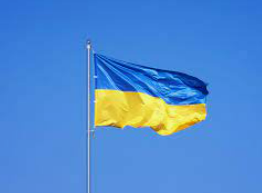
RUSSIAN ATTACK ON THE UKRAINE

Freedom is in great danger in Europe, now more than ever before. 

We should have known this when Putin annexed Crimea in February and March of 2014.   Leaders of the Western world immediately orchestrated a vigorous crescendo of condemnation against Putin and his imperialistic ambitions, and attempted to thwart Russian expanisionism by instigating international sanctions. I fear that western reaction has not been aggressive enough.  The West uses merely words and insufficient sanctions, while Putin uses military might. 

Among the timid, there had been the occasional suggestion of a "dialogue" or a "diplomatic solution",  which not surprisingly, did not transpire. (However, if it did, I imagine it would have played out somewhat like the Munich Agreement from September 1938, where Hitler and Mussoluni met with Chamberlain and Churchill in a mock display of diplomacy.  And Europeans heaved a  great sigh of relief that it was the sign of peace in their day. Well, that's what Chamberlain feverishly proclaimed.)  Putin would not have wasted his time with diplomacy.

Putin has the same imperialistic ambitions as did Stalin and Hitler during WWII.  Those two dictators merged their military might to invade Poland in September 1939.  On the 1st day, the Nazi German armies invaded Polish territory along its' northern, western and southern borders.   The Polish military knew of the imminent attack but were vastly outnumbered and outgunned by the Nazi German war machine.  Then on 17th day the Soviet Red Army invaded along the eastern border of Poland.  This joint invasion resulted in the total collapse of the Polish nation, and territory was split between Hitler and Stalin.

History has taught us many lessons of this era, but we did not pay attention. 

The Ukraine was invaded today!  I was shocked and saddened to watch the video footage on television of bombs exploding and throngs of refugees trying to escape or seek shelter, and children crying. Many innocent Ukraines died today, upon the orders of this evil, monstrous Putin.

It is horrifying that in 2022, we are watching the outbreak of war reminisicent of that which happened in WWII.  

Putin is seeking to restore Russian supremacy and expand not only on European soil, but to dominate the entire world. Putin thinks that he will succeed where Hitler failed.

Putin will not succeed as long as the West and all European nations stand strong.

I am not of Ukrainian descent, but my heart goes out to the people of the Ukraine who are in fear and desperation for their Beloved country, for Peace, for their Dearest families.  My prayers are with you all, Dear Friends of Peace.

I also pray that the leaders of the Western world, particularly, the United States government prevail with courage and power.  I pray that President Biden's decisions will be based on reason and logic. And that when decision is made to take action, that it be swift and hard.  Words are not enough to block the rampage of a delirious despot like Putin, who is bent on murdering innocent people in his path. Down with the Russia empire!  Down with Putin!


God Protect and Bless The Ukraine!!

SLAVA UKRAINI!!

HEROIAM SLAVA!!!


December 31, 2018

DECEMBER 31 - DAILY CHRONICLES OF HISTORY

DECEMBER 31

1942

Battle of the Barents Sea was a naval engagement that took place on December 31, 1942. in the Barents Sea, north of North Cape, Norway.  Warships of the German Kriegsmarine attempted to intercept and attack British ships which were escorting convoy JW 51B to Kola Inlet in the USSR. The British fleet included 2 light cruisers, 6 destroyers, 2 corvettes, 1 mine-sweeper and 2 trawlers against Nazi's 2 heavy cruisers and 6 destroyers.  The enemy's objective failed to inflict significant losses on the allied convoy, which infuriated Hitler. Subsequently, he ordered a change in German naval strategy which would concentrate on the U-boat fleet rather than surface ships. British casualties were 1 destroyer damaged,  1 destroyer and 1 minesweeper sunk, and 250 KIA. German casualties were 1 cruiser damaged, 1 destroyer sunk, and 330 KIA.


1944

Polish National Committee of Liberation declared itself the Provisional Government of the Polish Republic. Also known as the PKWN, it was joined by several members of the London-based Polish government in exile, among them Stanisław Mikołajczyk (later chased out of the country).  The PKWN was then transformed into Provisional Government of Republic of Poland.  Henceforth, all departments were renamed, among them the Department of Public Security which became the infamous Ministry of Public Security (a Soviet-controlled secret police).


1989

Poland Regained Sovereignty:  The People's Republic of Poland officially became the Republic of Poland.  Polish history has been one of many catastrophes caused by invasions by neighboring enemy states. Polish as a nation-state ceased to exist for over a hundred years when it had been partitioned and occupied by Germany, Austria and Russia.  Poland regained its independence after the end of World War I by the Treaty of Versailles but on September 1, 1939 was invaded again by Germany, and on September 16, 1939 by the Soviet Union (in accordance with the secret Molotov-Ribbentrop Pact). More than six million Polish citizens (ethnic and Jewish Poles) perished in the war.  Following the end of World War II, the Soviet Union occupied Poland and established it as a satellite state under iron-hand Soviet control.  It wasn't until the rise of Solidarnosc (Solidarity) under the auspices of Lech Walesa, that Poland began its struggle for freedom and independence.  In the aftermath of nation-wide protests as well as international pressure, the Solidarity movement paved the way for the re-emergence of a free, sovereign, and democratic Poland once again.   Lech Walesa was quoted as saying ".....We respect the dignity and the rights of every man and every nation. The path to a brighter future of the world leads through honest reconciliation of the conflicting interests and not through hatred and bloodshed. To follow that path means to enhance the moral power of the all-embracing idea of human solidarity...."


2018

Polish Greatness (Blog) wishes to thank all those who share an interest in Polish history and culture, and who have visited this blog (as well as the parent website, Polish Greatness.com.)  In a world that is so unpredictable and changing so quickly, it is important to learn about history. Greater understanding is essential to avoid the errors and tragedies of the past.  It is my greatest hope that the world leaders will use calm, intelligence, justice and collaboration to nurture a world of peace, tolerance, democracy and protection of human rights.


Zbliżający się Nowy Rok niesie wszystkim nadzieję
na uspokojenie, życzliwość i spełnienie marzeń.
W te piękne i jedyne w roku chwile
chcę złożyć najlepsze życzenia
pogodnych, zdrowych i radosnych dni
oraz szczęśliwego Nowego Roku !


The upcoming New Year brings hope to all
to calm, friendliness and a dream come true.
In these beautiful and unique moments
I want to send my best wishes
cheerful, healthy and joyful days
and a Happy New Year !


December 30, 2018

DECEMBER 30 - DAILY CHRONICLES OF HISTORY

DECEMBER 30

1939

Captain Jan Górski was a Polish Army officer who had escaped to France after the invasion of Poland. On December 30, 1939 he submitted several reports to the Polish Chief of Staff proposing the creation of a special Polish covert unit. Its purpose was to maintain links with the underground Polish resistance movement, ZWZ and fight against the enemy using covert operation. At first the reports were ignored but finally General Zajac, Commander of the Polish Air Force, recognized the urgency of such a unit, but that the PAF did not have the transport or training facilities to support such a plan. After the Fall of France, Gorski and his colleagues fled to Britain, and proposed the plan to British Command but it was not considered.  On September 20, 1940 Polish General Wladyslaw Sikorski, ordered the creation of Section III, whose purpose would be contingency planning for covert operations in Poland, air delivery of arms and supplies, and training of paratroops.


1941

Churchill's 'Chicken' Speech:  Churchill gave a powerful speech to the Canadian Parliament on December 30, 1941. Here are some excerpts: "…..That grand old minstrel, Harry Lauder – Sir Harry Lauder, I should say, and no honour was better deserved – had a song in the last War which began, “If we all look back on the history of the past, we can just tell where we are.” Let us then look back. We plunged into this war all unprepared because we had pledged our word to stand by the side of Poland, which Hitler had feloniously invaded, and in spite of a gallant resistance had soon struck down. There followed those astonishing seven months which were called on this side of the Atlantic the “phoney” war. Suddenly the explosion of pent-up German strength and preparation burst upon Norway, Denmark, Holland, and Belgium......On top of all this came the great French catastrophe. The French Army collapsed, and the French nation was dashed into utter and, as it has so far proved, irretrievable confusion. The French Government had at their own suggestion solemnly bound themselves with us not to make a separate peace. It was their duty and it was also their interest to go to North Africa, where they would have been at the head of the French Empire. In Africa, with our aid, they would have had overwhelming sea power. They would have had the recognition of the United States, and the use of all the gold they had lodged beyond the seas. If they had done this Italy might have been driven out of the war before the end of 1940, and France would have held her place as a nation in the counsels of the Allies and at the conference table of the victors. But their generals misled them. When I warned them that Britain would fight on alone whatever they did, their generals told their Prime Minister and his divided Cabinet, “.....In three weeks England will have her neck wrung like a chicken..." Some chicken............ (Churchill then paused to allow response - loud laughter and applause from Canadian politicians)...........Some neck....." (followed by standing ovation, and much applause)


1947

The High Command Trial was the last of 12 trials of the United States Military Tribunal at Nuremberg (not to be confused with the Nuremberg Trials). It was also called the "Subsequent Nuremberg Trials". The trial was held from December 30, 1947 to October 28, 1948. The accused were high-ranking generals of the Wehrmacht (including a field marshal and a former Admiral).  They were charged with having planned, facilitated or participated in carrying out numerous war crimes and atrocities in German-occupied countries during the war.   Of the 14 defendants, two were acquitted on all counts. Johannes Blaskowitz committed suicide during the trial. The remaining defendants received prison sentences from three years to life imprisonment,  including time served.


December 29, 2018

DECEMBER 29 - DAILY CHRONICLES OF HISTORY

DECEMBER 29

1940

The Second Great Fire of London:  On the night of December 29 to 30, 1940, over 136  German bombers dropped about 100,000 bombs on London.  The city was engulfed in fires that covered a greater area than the infamous Great Fire of London in 1666.  Most targets were non-residential buildings such as businesses, warehouses, and churches.  Firefighters struggled desperately to put out the flames but were hampered by a water shortage. The main water-main in the City was bombed. They could not even obtain  water from other hydrants as it caused that the water pressure to drop.  Attempts to draw water from the River Thames were in vain as the river was in low tide and the wind fanned the inferno even further.  The German bombers had dropped incendiary bombs on London's beloved St. Paul's Cathedral, and there were fears that it would be destroyed in the raid.  Churchill was adamant that the Cathedral be saved at all costs. According to an eye-witness report by American correspondent Ernie Pyle,  "....The greatest of all the fires was directly in front of us. Flames seemed to whip hundreds of feet into the air. Pinkish-white smoke ballooned upward in a great cloud, and out of this cloud there gradually took shape—so faintly at first that we weren’t sure we saw correctly—the gigantic dome of St Paul’s Cathedral. St Paul’s was surrounded by fire, but it came through. It stood there in its enormous proportions—growing slowly clearer and clearer, the way objects take shape at dawn. It was like a picture of some miraculous figure that appears before peace-hungry soldiers on a battlefield......."


US President Franklin D. Roosevelt Fireside Chat "Arsenal of Democracy":  ".......We face this new crisis -- this new threat to the security of our nation .....The Nazi masters of Germany have made it clear that they intend not only to dominate all life and thought in their own country, but also to enslave the whole of Europe, and then to use the resources of Europe to dominate the rest of the world.....We must be the great arsenal of democracy. For us this is an emergency as serious as war itself. We must apply ourselves to our task with the same resolution, the same sense of urgency, the same spirit of patriotism and sacrifice as we would show were we at war.  We have furnished the British great material support and we will furnish far more in the future. There will be no "bottlenecks" in our determination to aid Great Britain. No dictator, no combination of dictators, will weaken that determination by threats of how they will construe that determination.......The British have received invaluable military support from the heroic Greek army and from the forces of all the governments in exile. Their strength is growing. It is the strength of men and women who value their freedom more highly than they value their lives.......We have no excuse for defeatism. We have every good reason for hope -- hope for peace, yes, and hope for the defense of our civilization and for the building of a better civilization in the future............."


1943

"Operation Partridge"  was a British Commando raid during the Second World War, that took place during the Italian Campaign by No. 9 Commando. The Operation was a diversionary raid behind the German lines, to cover the withdrawal of the X Corps in preparation for its proposed assault across the Garigliano river.  No. 9 Commando landed on the north shore of the estuary during the night and attacked several German positions before withdrawing across the river in DUKWs.  The No.4 and No.6 troops  had to cross 2,700 yards (2,500 m) upriver by using ropes and swimming. Casualties were nine commando KIA, but the unit captured 29 prisoners.

December 28, 2018

DECEMBER 28 - DAILY CHRONICLES OF HISTORY

DECEMBER 28

169 B.C.

Miracle of Light:  After two hundred years of foreign tyranny and religious persecution, the Jewish people lit the sacred menorah on December 28, 169 B.C., to rededicate the Holy Temple of Jerusalem. The lights of the menorah remained lit for eight days, though there was not enough oil. It was the birth of the Jewish holiday, Hanukkah. Every night throughout the 8 day holiday, a candle or oil-based light is lit. The number of lights lit is increased by one each night.  An extra light called a shamash, meaning "attendant"  is also lit each night, and is given a distinct location, usually higher than the others.  In 2018 Hanukah began on December 2 and ended on December 10.  Hanukkah begins at the 25th day of Kislev and concludes on the 2nd or 3rd day of Tevet (Kislev can have 29 or 30 days). The Jewish day begins at sunset. In the year 2019 Hanuka will begin at Sunset, on December 22, 2019 until nightfall on December 30, 2019  After the lights have been kindled, there is a blessing of the candles (translation) "Blessed are You, LORD our God, King of the universe, Who has sanctified us with His commandments and commanded us to kindle the Hanukkah light[s]." a Hebrew hymn is sung, translated, "We kindle these lights for the miracles and the wonders, for the redemption and the battles that you made for our forefathers, in those days at this season, through your holy priests. During all eight days of Hanukkah these lights are sacred, and we are not permitted to make ordinary use of them except for to look at them in order to express thanks and praise to Your great Name for Your miracles, Your wonders and Your salvations."


1832

First U.S. Vice-President Resigned. John C. Calhoun held office as Vice President from March 4, 1825 to  December 28, 1832 during two Presidential administrations (of John Quincy Adams and of Andrew Jackson.) Calhoun is remembered for his strong support for the practice of slavery and for advancing the concept of minority party rights in politics. His objective was to protect the interests of the white South.  His political career was based on the ideologies of nationalism, states' rights, limited government, nullification, and opposition to high tariffs.  Calhoun was despised by Jackson and his supporters for his alleged attempts to subvert the unity of the nation for his own political gain. On his deathbed, Jackson regretted that he had not had Calhoun executed for treason. "My country," he declared, "would have sustained me in the act, and his fate would have been a warning to traitors in all time to come." Even after his death, Calhoun's reputation among Jacksonians remained poor. They disparaged him by portraying him as a man thirsty for power, who when he failed to attain it, sought to tear down his country with him.


1918

First Woman MP in British House of Commons:  On December 28, 1918, Constance Georgine Markievicz became the first woman elected to the British House of Commons, however she did not take her seat. She was also the first woman in the world to hold a cabinet position as Minister for Labour from 1919 to 1922.   She was an Irish Fianna Fáil politician, a fervent revolutionary, nationalist, suffragette and socialist. She served as a Teachta Dála for the Dublin South constituency from 1921 to 1922 and 1923 to 1927. She was a Member of Parliament (MP) for Dublin St Patrick's from 1918 to 1922.   In 1909 Markievicz and Bulmer Hobson founded Fianna Éireann, a para-military nationalist scouting organisation that instructed teenage boys in the use of firearms.  On August 16, 1909, at its first meeting in Camden Street, Dublin, she was almost expelled because women were forbidden to join any physical force movement. But Hobson supported her, and she was elected to the committee. In 1911 at an Irish Republican Brotherhood demonstration attended by 30,000 supporters, she was arrested and jailed for the first time. They were protesting against King George V's visit to Ireland.  Markievicz died on July 15, 1917 at the age of 59, due to complications related to appendicitis. She had given away the last of her wealth, and died in a public ward "among the poor where she wanted to be".  One of the doctors attending her was her revolutionary colleague, Kathleen Lynn. Also at her bedside were Casimir and Stanislas Markievicz, Éamon de Valera and Hanna Sheehy-Skeffington.  Refused a state funeral by the Free State government, she was buried at Glasnevin Cemetery, Dublin, and de Valera gave the funeral oration.

December 27, 2018

DECEMBER 27 - DAILY CHRONICLES OF HISTORY

DECEMBER 27

1918

Polish Uprising:  On this day in 1918, the Uprising began after a stirring patriotic speech by Ignacy Paderewski. (He was a famous pianist who would become in the following year the Polish Prime Minister.) The Polish people hoped for a free and sovereign Poland. They saw their opportunity to make serious plans for an uprising when Kaiser Wilhelm abdicated on November 9, 1918. (This marked the end of the German monarchy and empire, and would be replaced by the Weimar Republic.) By evening, Polish insurgents began shooting in front of Poznań's Police Headquarters and succeeded in capturing the main train station, main post office and part of city fortifications. Simultaneously, Polish uits fought in other towns and captured Szamotuły, Środa Wielkopolska, Pniewy, Opalenica, Buk, Trzemeszno, Września and Gniezno.   The Uprising had a significant effect on the Treaty of Versailles, which granted a reconstituted Second Polish Republic. Previously the nation had been partitioned and  was occupied under the yoke of foreign tyranny by Russia, Prussia, and Austria, for 126 years.


1944

Soviets Disbanded the special Polish forces:  When the Soviet Red Army occupied Poland after the end of the Warsaw Uprising, they discontinued the Ciechociemni (the Polish underground command fighting forces).  The Ciechociemni was an independent division of the British British SOE (Special Operations Executive). The Poles selected their own men (and women) to conduct covert operations throughout Nazi-occupied Europe. More than 300 Polish special forces and 28 emissaries successfully parachuted into Poland to fight in the Warsaw Uprising. They also conducted missions in Albania, Greece, Italy and Yugoslavia. They parachuted into France to organize an underground resistance movement among the half million Polish minority.  Among the famous members of the unit was Krystyna Skarbek, a beautiful young Polish spy working with the SOE. She was highly celebrated for her daring exploits in intelligence and dangerous missions in Nazi-occupied Poland and France.  The identities of the many other Polish agents are still unknown. The oldest was 54 years old, the youngest was 20.  Of 316 Ciechociemni, 103 perished during the war: in combat with the Germans, executed by the Gestapo, or in crashes. Nine were executed after the war by the Soviet controlled Polish People's Republic.  The Ciechociemni took part in a total of 91 operatives in the Warsaw Uprising of 1944.


1983

Pope John Paul II forgave his would-be assassin.   On this day, Pope John Paul II visited Mehmet Ali Agca at Rebibbia jail, a high-security prison in Rome.  He entered Agca's cell and the two spoke quietly for about twenty minutes. Their conversation was so hushed and inaudible as to seem as though it were a confessional.  When the Pope left the cell, Agca went down on one knee and kissed the Pope's hand (Following Agca's capture in the 1981 assassination attempt, he declared that he shot the Pope because he was a symbol of Christianity.) 


December 26, 2018

DECEMBER 26 - DAILY CHRONICLES OF HISTORY

DECEMBER 26

1943

British Navy Sank Nazi German Battleship:  On December 26, 1943, off the coast of North Cape, Norway, the British vessel HMS Duke of York accompanied by its escorting ships intercepted, attacked and sunk the German battleship, the Scharnhorst as it was headed towards an allied convoy.  The Scharnhorst ranked as a capital ship in the Kriegsmarine, and took part in operations raiding British merchant shipping in north Atlantic routes. They battled the HMS Rawalpindi in a short engagement (November 1939). and joined by the Gneisenau took part in Operation Weserübung (April–June 1940), the German invasion of Norway, and sank the British aircraft carrier, as well as the HMS Glorious and her escort destroyers, the Acasta and the Ardent.  (In the latter engagement, the Scharnhorst achieved one of the longest-range naval gunfire hits in history.)  Only 36 men were rescued from the Scharnhorst, out of a crew of 1,968.


1944

American Army Broke the Siege on Bastogne:   The Siege of Bastogne was part of the Battle of the Bulge fought between American and German forces  (from December 20 to 27, 1944).  Elements of General George Patton's Third Army succeeded in reaching Bastogne from the southwest, arriving from the direction of Assenois. The spearhead reached the lines of the 326th Engineers on the day after the Christmas attack at about 16:50. The 101st's ground communications with the American supply dumps were restored on December, 27 and the wounded were evacuated to the rear. Gen. Taylor reached Bastogne with the 4th Armored Division and resumed command.  With the encirclement, the troops of the 101st expected to be relieved, but were given orders to resume the offensive


1991

End of the Cold War:   The dissolution of the USSR officially took place on December 26, 1991, thereby granting sovereignty and independence to its satellites states.  The Declaration, number 142-Н enacted by the Supreme Soviet of the Soviet Union acknowledged the independence of the former Soviet republics and created the Commonwealth of Independent States (although five of the signatories ratified it much later or did not do so at all.)  On the previous day, Soviet President Mikhail Gorbachev, the eighth and final leader of the Soviet Union, resigned and declared his office extinct. Gorbachev handed over his powers, including control of the Soviet nuclear missile launching codes to Russian President Boris Yeltsin. At 7:32 p.m., the Soviet flag was lowered from the Kremlin for the last time and replaced with the pre-revolutionary Russian flag.  The repercussions following the collapse of the Soviet Union led to a severe economic crisis and catastrophic fall in living standards in post-Soviet states and the former Eastern Bloc. It was worse than the Great Depression.  Between 1988–1989 and 1993–1995 poverty and economic inequality skyrocketed.   According to a 2014 poll, 57 percent of Russian citizens regretted the collapse of the Soviet Union, while 30 percent said they did not.


December 25, 2018

DECEMBER 25 - DAILY CHRONICLES OF HISTORY (CHRISTMAS GREETINGS TO ALL!)

DECEMBER 25

336 A.D.

The First Christmas Celebration took place on December 25, 336 AD.  The first Christmas celebration by the early Christian Church occurred 331 years after Christ’s Crucifixion in Jerusalem on April 3rd, 33 A.D. (During the Lunar Eclipse at 5:12 PM LMT) and Pentecost –  which is considered to be the inception date of the Roman Catholic Church. In an old list of Roman bishops, compiled in 354 A.D. these words appear for 336 A.D.: “25 Dec.: natus Christus in Betleem Judeae.” Translation: December 25th, Christ born in Bethlehem, Judea.  In the 12 century a Syrian bishop, Jacob Bar-Salibi wrote, "It was a custom of the Pagans to celebrate on the same 25 December the birthday of the Sun, at which they kindled lights in token of festivity. In these solemnities and revelries the Christians also took part. Accordingly when the doctors of the Church perceived that the Christians had a leaning to this festival, they took counsel and resolved that the true Nativity should be solemnised on that day."  (Note: Orthodox Christians used to celebrate Christmas on December 25th as per the Julian Calendar, but when the Gregorian Calendar was instituted, the new corresponding date was January 7th) Pope Julius I (from February 6,  337 to his death in 352), declared the nativity celebration of Christ on December 25th because it coincided with the pagan tradition of Winter Solstice. Christmas as we know it today is a fusion of ancient pagan practices and several hundred hundreds of years of merging secular and religious traditions. Many symbols and traditions we enjoy in our modern celebration of Christmas were actually derived from traditional pagan northern European Yule celebrations, such as the burning of the Yule log,  decorating Christmas trees, feasting of ham, hanging of boughs, holly, and mistletoe, etc. These are all historically practices linked to the Yule of so long ago.


1025

Coronation of Polish King:   Mieszko II Lambert was crowned the King of Poland on December 25, 1025 and reigned until 1031.  He devised the tactics of two devastating invasions to Saxony in 1028 and 1030,  ran a defensive war against Germany, Bohemia and the Kievan princes. However in 1031,  Mieszko II was forced to escape from the country after an attack of Yaroslav I the Wise, who installed Mieszko's older half-brother Bezprym onto the Polish throne.  Mieszko took refuge in Bohemia, but he was imprisoned by the Duke Oldrich.  At this time, several Polish territorial acquisitions of his father were lost: Upper Lusatia (also known as Milsko), part of Lower Lusatia, Red Ruthenia, western and central part of Upper Hungary (now Slovakia) and probably Moravia.  In 1932, Mieszko was able to regain power in one of the three districts, and thus united the country by his sage use of the remaining power structures.


1914

The Christmas Truce:  It was the stuff of legends which a century later still fascinate the human spirit.  On Christmas Eve, in the midst of World War I,  British soldiers of the British Expeditionary Force (BEF) heard German troops in the trenches opposite them singing carols and patriotic songs and saw lanterns and small fir trees along their trenches. It moved them to share in the Christmas spirit. Messages were exchanged between them across the trenches. They exchanged food and souvenirs, or were allowed to go between the lines to recover their injured buddies, or bury their dead.  However, the truce was not ubiquitous as fighting continued in other sectors.   It was a remarkable point in time and was perceived as a symbol of peace and humanity amidst one of the most bloodiest wars in human history.


1916

Polish Saint Died:   Saint Albert Chmielowski died on December 25, 1916. He was the founder of both the Servants of the Poor and Sisters Servants of the Poor. Chmielowski fought in the January uprising and was badly injured so that his leg had to be amputated.  He relied upon a wooden prosthesis for the remainder of his life.  For a period of time he was a very popular and well-known painter and depicted religious themes in most of his work.  His held strong political views, and developed a gentle and compassionate spirit for the suffering of the poor.  He felt compelled to help those in need and served in the homeless shelters.  He joined the Jesuits but later left to become a member of the Third Order of Saint Francis.  (John Paul II canonized Chmielowski as a saint of the Roman Catholic Church on November 12, 1989 in Saint Peter's Square.  Pope John Paul II was spiritually inspired by Brother Albert, whose life had a profound effect on him.  He wrote a play called "The Brother of Our God" in 1996 because he felt "a real spiritual support and example in leaving behind the world of art, literature, and the theater, and in making the radical choice of a vocation to the priesthood”.


1941

God is Born:   A Polish man by the name of Jozef Jedrych retold his experience of Christmas in Block no. 10a in the Auschwitz concentration camp.  He recalled that on the night of December 25, 1941,  the prisoners of the camp tried to celebrate the Holy night in their blocks and to help their fellow inmates whose spirits had broken. He described how “.....the singing of German carols began, and then like the waves of the sea came the powerful words from a Polish carol, "Bóg się rodzi"  -  ‘God is born, the powers tremble’..... and others, until the final chord in the form of the Dąbrowski Mazurka  (the Polish national anthem). Everyone exchanged warm, cordial embraces and cried for a long time. There were those who sobbed out loud. . . . Such a grand moment never fades from memory. That Christmas is fixed forever in my heart and memory....”  (Note:  Bog Sie Rodzi was written by Franciszek Karpiński in 1792.  The composer is unknown but has its origins in 16th century Poland when it was played as a coronation polonaise for Polish kings.   This Christmas carol is considered as the National Christmas hymn of Poland, and, for a short time, it was also considered a national anthem.


2018

Polish Greatness (Blog) Wishes You A Blessed Christmas!   Wesołych Świąt !
 Joyeux Noel !
 Buon Natale !
 Feliz Navidad !
 God Jul !
Καλά Χριστούγεννα !
 Mele Kalikimaka !
 Frohe Weihnachten !
Счастливого рождества !


December 24, 2018

DECEMBER 24 - DAILY CHRONICLES OF HISTORY

DECEMBER 24

1798

Beloved Polish Poet:  Adam Mickiewicz (dob) was a Polish poet, dramatist, essayist, publicist, translator, professor of Slavic literature, and political activist.  He is regarded as National Poet in Poland, Lithuania and Belarus.  Mickiewicz was a prominent figure in Polish Romanticism, and is regarded as one of Poland's "Three Bards" ("Trzej Wieszcze"). He is widely regarded as Poland's greatest poet and has been compared to Byron and Goethe.  Scholars refer to the "cult of Mickiewicz" as indicative of the great importance he held well beyond his literary masterpieces - he was upheld as a "national prophet".  According to Czeslaw Milosz, the greatest achievement by Mickiewicz was "Dziady" (translated: Forefathers Eve).  It was written over an extended period of time,  and parts II and IV were published in 1823.  Accompanying part III was a long descriptive poem, "Ustęp" (Digression) which expressed Mickiewicz's experiences in, and views about Russia, and portayed the nation as a huge prison. Mickiewicz pitied the oppressed Russian people, and wondered about their future.  Miłosz aptly described the epic poem as a "summation of Polish attitudes towards Russia in the nineteenth century". The poem evoked strong responses from the likes of the great literary icons such as Joseph Conrad (Under Western Eyes)  and Pushkin ("The Bronze Horseman").  In 1901, the poem was adapted for a theatrical performance staged by Stanisław Wyspiański. Milosz described it as "a kind of national sacred play, occasionally forbidden by censorship because of its emotional impact upon the audience."  In fact, in 1968, the communist-controlled Polish government closed down the production of the play, which spurred the 1968 Polish political crisis!  Adam Mickiewicz died on November 26, 1855


1941

Himmler Ordered Confiscation of Jewish Property:  The following is an excerpt translated to English; "Reichsfuhrer Himmler has ordered the collection of all fur coats, furs and hides of any kind whatsoever that have been found amongst and confiscated from Jews; together with those of still existing Jews, which are about to be confiscated immediately, particularly in the ghettos in the General-governement [occupied Poland]. The number is to be regularly reported to me by teleprinter from December 29th 1941, not later than 1800 hours. The Reichsfuhrer has commanded that his order be carried out without delay… The Jewish Councils are to be warned that they themselves, along with any Jews caught in possession of a fur or hide after the stipulated period has expired, will be shot."  (Report of the Nazi German Chief of Security Police)


1946

Polish General Murdered in Soviet Prison:  On December 24, 1946, while imprisoned in Butyrka prison, General Leopold Okulicki was murdered by the notorious Soviet NKVD.   He had been arrested on trumped up charges of distributing propaganda against the Soviet Union, state terrorism, among a slew of other accusations.  He was among several other prisoners subjected to a mock Soviet trial ("Trial of the Sixteen") and sentenced to 10 years imprisonment.   Okulicki was a General of the Polish Army and the last commander of the anti-German underground Home Army (Armia Krajowa) during World War II.  During the trials,  Okulicki had remarked that  “In comparison with the NKVD, the Gestapo methods are child's play".  (Note: Poland never collaborated with Nazi Germany.  Poland was not a quisling state. The Polish armed forces supported the Allies and fought against the Nazi Germans throughout the entire war)


December 23, 2018

DECEMBER 23 - DAILY CHRONICLES OF HISTORY

DECEMBER 23

1937

Wellington Bomber First Flight:  The first production of the  Wellington Mk I, L4212, conducted its first flight on December 23, 1937. The  L4212 subsequently participated in an intensive flight programme. Flight trials with L4212 affirmed the aerodynamic stability initially encountered by K4049, but also revealed the aircraft to be nose-heavy during dives, a flaw attributed to the redesigned elevator. The problem was resolved following modifications, including the interlinking of the flaps and the elevator trim tabs.  The Wellington was used as a night bomber in the early years of the Second World War. During 1943, it was surpassed by larger four-engined "heavies" such as the Avro Lancaster. The Wellington continued to serve throughout the war in other capacities, such as anti-submarine aircraft.  It was the only British bomber that was produced throughout the duration of the war, and produced in greater numbers than any other British-built bomber.


1939

Stefan Bronisław Starzyński was the Mayor of Warsaw before and during the Invasion of Poland in 1939.  He was assassinated by the Nazi Germans Gestapo between December 21 and 23, 1939 in Warsaw, or its environs. Definitive proof is unavailable.  According to recent eyewitness testimony during an inquiry of the Polish Institute of National Remembrance, the attack was carried out by Gestapo functionaries Oberscharführer Hermann Schimmann, Hauptscharführer Weber, and Unterscharführer Perlbach.  Again, it was not possible to determine who gave the order to assassinate Mayor Starzynski.  When Poland was invaded by the Germans on September 1, 1939, Stefan Starzynski refused to evacuate the city along with other state authorities and diplomats.  He stayed behind and joined the infantry army as a Major. When Warsaw capitulated to the Germans on September 27, a Polish pilot offered Starzynski the means to evacuate, but was refused. On October 5th, he was arrested by the Gestapo, released, and then arrested again on October 27 and detained in Pawiak prison. By December he was killed.


2005

Lech Kaczynski Won Presidency:   On December 23, 2005, Lech Kaczynski assumed office of President of the Republic of Poland, taking an oath before the National Assembly.  During his inauguration he stated several goals he would pursue during his presidency. Among those concerning internal affairs were: increasing social solidarity in Poland, bringing justice to those who were responsible for, or were affected by communist crimes in the People's Republic of Poland, fighting corruption, providing security in economy, and safety for development of family. Kaczyński also stated that he would seek to abolish economic inequalities between various regions of Poland. In his speech he also emphasized combining modernization with tradition and remembering the teachings of Pope John Paul II.  On December 21, 2008, Kaczyński became the first Polish head of state to visit a Polish synagogue and to attend religious services held there. His attendance coincided with the first night of Hanukkah.....On April 10, 2010, a Tupolev Tu-154M plane crashed while approaching Smolensk Air Base in Russia.  Aboard were Lech Kaczyński, his wife Maria Kaczyńska, and other members of a Polish delegation (top public and military figures) who were travelling from Warsaw to Katyn to commemorate the Katyn massacre. There were no survivors.  96 people were killed in the crash, including many of Poland's highest military and civilian leaders.  Poland was in national mourning, and international reaction was one of shock.  Kaczynski was greatly admired by the Jews in Israel, because he promoted educating Polish youth about the Holocaust. There was widespread grief in Israel over his death.

December 22, 2018

DECEMBER 22 - DAILY CHRONICLES OF HISTORY

DECEMBER 22

1941

Churchill at Washington Conference:  Winston Churchill met with Franklin D. Roosevelt in Washington, DC for the First Washington Conference, also called the Arcadia Conference.   The leaders and a team of political aides conducted very candid discussions which concluded with several major decisions that shaped the war effort in 1942-1943; the decision to invade North Africa in 1942; to send American bombers to bases in England; and for the British to strengthen their forces in the Pacific.  Moreover, the Conference created the Combined Chiefs of Staff, headquartered in Washington, which approved and finalized all military decisions.  Arcadia was the first meeting on military strategy between Britain and the United States; it came two weeks after the American entry into World War II. Despite domestic pressure in the U.S. to concentrate the war on Japan, Roosevelt was resolute to approach a "Europe First" strategy - that to win the war the primary objective was to defeat the Nazis.


1989

Berlin Wall Reopened:   Following the end of WWII,  vehicles and pedestrians were able to travel freely through the gate located in East Berlin, that is, until the Berlin Wall was built on August 13, 1961. The next day authorities closed the gate border crossing which separated  east and west sectors of the city. From 1945 to 1957, the Soviet flag flew from atop the gate, but was replaced by an East German flag. During the 1953 riots in East Berlin the Soviet flag was ripped down by protesting West Germans.  In 1963, U.S. President John F. Kennedy visited the Brandenburg Gate. The Soviets hung large red banners across it to prevent him looking into East Berlin.  On June 12, 1987, U.S. President Ronald Reagan addressed the people of West Berlin at the Brandenburg Gate, and issued a demand to Gorbachev to "tear down this wall!".  On December 22, 1989, the Brandenburg Gate border crossing was reopened when Helmut Kohl, the West German chancellor, walked through to be greeted by Hans Modrow, the East German prime minister.  Demolition of the rest of the wall around the area took place the following year.


1990

Lech Wałęsa was sworn in as Poland's President.  He was Poland's first freely-elected head of state in 63 years, and the first non-Communist head of state in 45 years.  During his presidency, Wałęsa saw Poland through privatization and transition to a free-market economy (the Balcerowicz Plan), Poland's 1991 first completely free parliamentary elections, and a period of redefinition of the country's foreign relations. He successfully negotiated the withdrawal of Soviet troops from Poland and won a substantial reduction in foreign debts, and supported Poland's entry into NATO and the European Union, though both occurred after his presidency. (nb: While working at the Lenin Shipyard (now Gdańsk Shipyard), Wałęsa became a trade-union activist founding the Solidarity movement. Consequently was persecuted and hounded by the communist authorities, placed under surveillance, fired in 1976, and arrested many times.  In August 1980 he was instrumental in negotiations that led to the ground-breaking Gdańsk Agreement between striking workers and the government. In 1983 Lech Walesa was awarded the Nobel Peace Prize, followed by more than 50 awards from 30 countries.)


December 21, 2018

DECEMBER 21 - DAILY CHRONICLES OF HISTORY

DECEMBER 21

1878

Jan Łukasiewicz (dob) was regarded as one of the most important historians of logic.  He was born in Lemberg, a city in the Galician kingdom of Austria-Hungary (now Lviv, Ukraine). Lukasiewicz' work focused on philosophical logic, mathematical logic, and history of logic. He worked on the concepts of traditional propositional logic, the principle of non-contradiction and the law of excluded middle. Modern work on Aristotle's logic builds on the tradition started in 1951 with the establishment by Łukasiewicz of a revolutionary paradigm. The Łukasiewicz approach was reinvigorated in the early 1970s in a series of papers by John Corcoran and Timothy Smiley, which inform modern translations of Prior Analytics by Robin Smith in 1989 and Gisela Striker in 2009.  In 2008 the Polish Information Processing Society established the Jan Łukasiewicz Award, to be presented to the most innovative Polish IT companies.


1936

First Flight of Schnellbomber:   On December 21, 1936, the German Luftwaffe ran a first flight of the infamous Junkers Ju 88. They referred to it as a Schnellbomber (translation: Fast Bomber) and was too fast for even fighters of the era to intercept.  When it was first flown, the Junkers managed to reach speeds of about 580 km/h (360 mph). The streamlined fuselage was modeled after the Dornier Do 17, but carried fewer defensive guns, but by the fifth prototype, it set a closed-circut record in March 1939, of 1,000 km (620 mi) carrying a 2,000 kg (4,410 lb) payload at a speed of 517 km/h (320 mph).


1941

German submarine was sunk.  On December 21, 1941 the HMS Deptford and Samphire launched depth charges on U-457 sinking her at coordinates 44°02′N 20°10′W . U-457 had been part of the infamous Nazi Wolf Pack and had attacked allied convoy HG 76 in the North Atlantic, north-east of the Azores and sank the Annavore, a 3,324 ton Norwegian merchant ship. (The convoy consisted of 32 cargo ships and was escorted by five destroyers, seven corvettes and one aircraft carrier.)

December 20, 2018

DECEMBER 20 - DAILY CHRONICLES OF HISTORY

DECEMBER 20

1917

On this day in 1917, Lenin appointed Felix Dzerzhinsky as director of Cheka, the first secret police organization in the Soviet Union. The Cheka imposed drastic measures during the Russian Civil War (1918-1921). Tens of thousands of political opponents were shot in the basements of prisons and in public places without trial. Dzerzhinsky had said: "We represent in ourselves organized terror—this must be said very clearly." At the end of the civil war, the Cheka was disbanded, but its succesor, the GPU, was created in 1922, albeit with lesser powers.  Eventually the GPU became whas was known as the NKVD, whose powers superceded the law. The NKVD was Stalins' instrument to wage the Great Terror of the 1930s.


1936

Would-be Assassin Arrested:   Helmut Hirsch, a German-Jew arrived at Stuttgart train station on the evening of December 20, 1936, with the mission of assassinating Adolf Hitler.  When his "friend" failed to meet him at the station as was expected, Hirsch checked into the Hotel Pelikan, across the street.  In the early hours of the morning of December 21,  Gestapo agents converged on the hotel and arrested Hirsch in his hotel room. He was charged with conspiracy to commit high treason, and was indicted for possession of explosives with criminal intent, though he was not in possession of explosives at the time of his arrest.  He was tried, found guilty, and condemned to death. Hirsch's family and friends began a campaign for his freedom. Despite international intervention ( The International Red Cross,  association of international lawyers, human rights organization in Norway,  and appeals to the League of Nations,  House of Commons in England, and a request that the United States grant Hirsh American citizenship -  all were for naught.   On June 4, 1937 at 06:00 am, Helmut Hirsch was executed by decapitation.


1944

The Siege of Bastogne took place in the Belgian town of Bastogne from December 20  to 27, 1944 and ended with an American victory. German forces attempted to reach the harbour at Antwerp by capturing the roadways through eastern Belgium (All seven of the main roads converged on Bastogne, and were just a few miles away from the border with Luxembourg, so control of this crossroads was vital).  American troops were outnumbered by about 5-1 and lacked sufficient cold-weather gear, ammunition, food, and  medical supplies. Moreover, many senior officers,  including the US 101st's commander, Major General Maxwell Taylor, were stationed elsewhere.  U.S. forces were surrounded and could not be resupplied by air, nor provided with air tactical support, during the worst weather in memory. Eventually the American troops were relieved by elements of General Patton's Third Army. In the period from December 19, 1944 to January 6, 1945, the 101st Airborne Divisions casualties were 341 killed, 1,691 wounded, and 516 missing.


1970

New communist party leader:  When the 1970 Polish protests were violently suppressed, Gierek was appointed by communist authorities to replace Gomułka as first secretary of the party.  Gierek took office on December 20, 1970 and became the most powerful politician in Poland. He was known for opening communist-controlled Poland to Western influences and for his economic policies based on foreign loans, which ultimately failed. The standard of living increased markedly in Poland in the first half of the 1970s, and Gierek was hailed as a miracle-worker, Polish citizens were elated to be able to purchase consumer items such as compact cars and travel to the West. In hindsight, it was the most prosperous of times in communist Poland.  However, the economy began to falter as a result of the 1973 oil crisis. By 1976 prices began to rise, sparking mass protests. Authorities forcibly suppressed the demonstrations and decided to cancel the planned price increases.  Poland's foreign debit soared during the late 1970s.   High foreign debts, food shortages, and an outmoded industrial base were among the factors that forced a new round of economic reforms.  Again, price increases were implemented in the summer of 1980 price setting off mass protests across Poland, especially in the Gdańsk and Szczecin shipyards.  In the Gdańsk Agreement, and other accords reached with Polish workers, Gierek was forced to concede their right to strike, and the Solidarity labor union was born.  Gierek was removed from office because of this outcome and was replaced by General Wojciech Jaruzelski, who imposed martial law in Poland on December 13, 1981. Gierek was promptly arrested and interned for a year, and he ended his political career in disgrace.


December 19, 2018

DECEMBER 19 - DAILY CHRONICLES OF HISTORY

DECEMBER 19

1941

Sinking of the HMS Stanley: On December 19,  1941 while on patrol with other escort carriers,  the HMS Stanley, on station astern of the convoy, reported the presence of another U-boat. Half an hour later U-574 scored a direct hit on her. Stanley exploded and sank (38°12′N 17°23′W) All except 25 crew members were lost.  Within 12 minutes, the sloop Stork responded and sank the submarine; 16 survivors were picked up.  Up until that fateful day, the HMS Stanley took part in sinking other U-boats (U-131 and U-134).


1981

Polish Ambassador Defected to the US:  Romuald Spasowski, Polish ambassador to the United States requested aslym and defected to the US on December 19, 1981.  He had once been a fervent communist, but made the decision to defect the US when the Polish government authorities launched a brutal crackdown on the Solidarity movement.  The next day he told a worldwide radio audience that he had defected to show support for Solidarity and Lech Wałęsa. "The cruel night of darkness and silence was spread over my country," he said.  The Polish government confiscated his family's property,  denounced him as a traitor and condemned him to death in absentia. Throughout the 80s, Spasowski toured the United States denouncing the Communist regime in Poland and played a leading role in the U.S. Information Agency's anti-Communist television program, 'Let Poland Be Poland'.


1986

Gorbachev Released Sakharov:   On December 19, 1986, Mikhail Gorbachev, General Secretary of the Community Party of the Soviet Union, ordered the release of Andrei Skahrov and his wife Yelena Bonner. They were arrested on January 22, 1980 following Sakharov's public protests against the Russian government for its intervention in Afghanistan in 1979.  The couple was living in an apartment in a building in the Scherbinki district of Nizhny Novgorod (then known as city of Gorky). During this period they were under constant surveillance by the Soviet police, and their apartment subjected to searches and heists. His apartment is now a museum.


December 18, 2018

DECEMBER 18 - DAILY CHRONICLES OF HISTORY

DECEMBER 18

1941

Hitler Ordered Extermination of Jews:  On December 18, 1941, Himmler asked Hitler, "What to do with the Jews of Russia?". Hitler replied "als Partisanen auszurotten" ("exterminate them as partisans").  According to Yehuda Bauer, an Israeli historian Yehuda Bauer, Hitler's remark is as close as historians will ever get to a clear, definitive order from Hitler for the murder of Jews during the Holocaust.  (Note:  From June to December 1941, Hitler embarked on an ill-conceived and unprepared invasion of the Soviet Union.  Code-named "Operation Barbarossa",  Hitler planned to conquer western Soviet Union, seize the oil reserves of the Caucasus, repopulate Soviet territories with German settlers, and use Slavs, in particular Poles, as slave labour for the Reich.)


1944

Nazi Germans destroyed Polish palace:  On December 18, 1944, the Nazi Germans deliberately and completely destroyed Bruhel Palace (also known as Sandomierski Palace)  shortly after the Warsaw Uprising.  The Palace use to be situated at Piłsudski Square. It was one of the largest palaces in Poland, and one of the most exquisite examples of rococo architecture in pre-World War II Warsaw.  The palace was built between 1639-42 by Lorenzo de Sent for Crown Grand Chancellor Jerzy Ossoliński in Mannerist style, and adorned with sculptures - an allegory of Poland above the main portal, four figures of kings of Poland in the niches and a statue of Minerva crowning the roof.  ( Warsaw’s municipal government has decided to rebuild the Brühl Palace according to its historic shape, but adapting the interiors to either office space, a hotel, or as suggested by the National Bank of Poland, its base of banking operations in Warsaw.)


1952

Polish Pilot Breaks Sound Barrier: Janusz Żurakowski was a Polish test pilot for Canada's AVRO.  On December 18, 1952, he broke the sound barrier diving the CF-100 fighter jet - the first straight-winged jet aircraft to ever achieve this feat.  During World War II, he saw combat during the invasion of Poland by Germany in September 1939, "Black September".  Żurakowski had his combat debut on September 2, 1939 flying an outdated PZL P.7 trainer against a squadron of seven German Dornier 17s over Deblin.  He was able to damage one of the Do17s but was forced to break off combat when his guns jammed. (During the interwar years, the PZL was state-of-the-art construction, and one of the first all-metal monoplane fighters in the world) He flew with several RAF squadrons during the Battle of Britain, shooting down enemy Nazi planes and often escorted USAAR bombers during daylight bombing raids. He was awarded the Virtuti Militari, the highest Polish honor, in 1943. He also received the Polish Cross of Valor and Bar (1941) and Second Bar (1943).


1998

The Institute of National Remembrance– Commission for the Prosecution of Crimes against the Polish Nation IIPN) was founded on this day. It is a Polish government-affiliated research institute with lustration prerogatives, as well as prosecution powers. It was created by legislation enacted by the Parliament of Poland. The Institute specialises in the legal and historical examination of the 20th century history of Poland in particular. IPN investigates both Nazi and Communist crimes committed in Poland between 1939 and the Revolutions of 1989, then documents its findings and disseminates the results of its investigations to the public. Since its inception, the IPN has collected over 90 kilometres (56 mi) of archives, released 1,794 publications, organized 453 exhibits, held 817 conferences, and launched 30 educational internet portals. In the same period, the Institute researchers held interviews with over 103,000 witnesses and interrogated 508 individuals charged with criminal offences, leading to 137 sentences by the courts of justice.


December 17, 2018

DECEMBER 17 - DAILY CHRONICLES OF HISTORY

DECEMBER 17

1938

Germans and Nuclear Fission:  Nuclear fission of heavy elements were discovered by Otto Hahn and his assistant Fritz Strassmann, on December 17, 1938.  Hahn was a chemist and pioneer in the fields of radioactivity and radiochemistry. He is considered the father of nuclear chemistry; he and Strassman were awarded the Nobel Prize in Chemistry in 1944,  for the discovery and the radiochemical proof of nuclear fission.  He was opposed to Hitlers national socialism, and of persecution of the Jews by the Nazi Party. Albert Einstein (who was born six days after Hahn) wrote that Hahn was "one of the very few who stood upright and did the best he could in these years of evil". After World War II, Hahn became a passionate campaigner against the use of nuclear energy as a weapon. Fritz Strassman resigned from the Society of German Chemists in 1933  when it became part of a Nazi-controlled public corporation. When he was blacklisted he stated that  "despite my affinity for chemistry, I value my personal freedom so highly that to preserve it I would break stones for a living." During WWII, Fritz and his wife Maria Heckter hid a Jewish friend in their apartment for months, putting themselves and their three-year-old son at risk.  In 1985 Fritz Strassmann was recognized by Yad Vashem Institute in Jerusalem as Righteous Among the Nations for his courageous act.


1939

German Cruiser Admiral Graff Spee was scuttled:  On December  17, 1939, Hans Langsdorff, commander of the Admiral Graff Spee gave the order to destroy all important equipment aboard the ship as well as disperse the ammunition supply throughout the ship, in preparation for the scuttling.  The next day, Langsdorff and 40 other men aboard the vessel were moved to the outer roadstead and an Argentine tug took the crew members.  At 20:55 the ship was scuttled before a crowd of 20,000 spectators. Multiple explosions occurred from the munitions set off jets of flames shooting high into the air and created a large cloud of smoke. The smoke was so dense that it obscured the ship which burned in the shallow water for the next two days. On December 20, Langsdorf shot himself in his Buenos Aires hotel room. He was in full dress uniform and lying on the ship's battle ensign.


1944

Malmedy Massacre:  Members of the Nazi Kampfgruppe Peiper massacred 84 American prisoners of war at the Baugnez crossroads, near Malmedy, Belgium. The Germans responsible were part of the 1st SS Panzer Division, a combat unit, during the Battle of the Bulge. On December 17, 1944 sometime between noon and 1 pm, German units advanced towards the Baugnez crossroads, two miles south-east of Malmedy.  At the same time an American convoy of about thirty vehicles, was turning right heading towards Ligneuville and St. Virth.  The American units of B Battery of the 285th Artillery Observation Battalion, joined forces with the 7th Armored Division. When the German group spotted the American convoy they immediately opened fire, immobilized the first and last vehicles of the column to a halt.  The Americans surrendered. About 120 American troops were assembled in the open field when the SS troops suddenly opened fire with machine guns on the prisoners. The Americans tried to flee but were shot down.  43 managed to survive. When American troops recaptured the area on January 13, 1945, they located the scene of the massacre, and recovered the bodies. The memorial at Baugnez bears the names of the murdered soldiers.


December 16, 2018

DECEMBER 16 - DAILY CHRONICLES OF HISTORY

DECEMBER 16

1922

Assassination of Polish President:   Just five days after taking office, Gabriel Narutowicz was assassinated on December 16, 1922, while attending an art exhibit in the National Gallery of Art “Zachęta”. The assassin was a painter, Eligiusz Niewiadomski, who had connections with the right wing National Democratic Party, He was arrested, tried and sentenced to death. He was executed outside the Warsaw Citadel on January 31, becoming a martyr to right-wing extremists.  During the elections in 1922, Narutowicz was supported by the center-left, in particular the Polish People's Party and by national minorities. He was subjected to harsh criticism from the National Democrats and far-right Endecja party. Strong zealots, ultra-Catholic unions and nationalists accused him of political indifference and for sympathy towards the Jews. Upon defeating the lead candidate Maurycy Zamoyski, Gabriel Narutowicz was elected the first president of the Second Polish Republic. In the first days of his presidency, Narutowicz knew that he did not have a majority government and as a gesture offered the post of Minister of Foreign Affairs to his rival Zamoyski.


1938

Zbigniew Eugeniusz Religa (dob) was a Polish cardiac surgeon and politician. Religa performed the first successful heart transplant in Poland in 1987. The patient was Tadeusz Żytkiewicz (who died in 2017) outliving the surgeon who gave him a new heart.  Dr. Religa passed away on March 8, 2009.  The surgery lasted for 23 hours. After the surgery an American photographer, James Stanfield from National Geographic, captured the famous, gripping photograph of Religa monitoring his patient's vitals on medical equipment. Religa pursued a career in politics. In 1993, he became a member of the Polish senate and was re-elected in 2001. As the centre and right wing of the Polish political landscape has been in constant flux ever since democracy was reinstated, Religa was a member of several parties and organizations. In 1993, he co-founded the Nonpartisan Bloc for Support of Reforms (BBWR) which gathered behind president Lech Wałęsa and was its leader in 1994. In 1995, Religa became the chairman of the short-lived party "The Republicans" founded by renegade BBWR members who refused to back Wałęsa in the presidential elections of 1995. However, Religa refused to run for president himself, and the Republicans eventually disintegrated when they failed to enter the Sejm in 1997.


1941

Nazi German Cabinet Meeting.  During a cabinet meeting, Hans Frank, Gauleiter of Poland, stated - "Gentlemen, I must ask you to rid yourselves of all feeling of pity. We must annihilate the Jews wherever we find them and wherever it is possible in order to maintain there the structure of the Reich as a whole..."  Hans Frank was Nazi Germany's chief jurist in the occupied Poland "General Government" territory. He was directly responsible for the mas murder of Jews during World War II.  He was captured by American troops on May 3,1945, at Tegernsee in southern Bavaria.   During the trial he converted, guided by Fr Sixtus O'Connor OFM, to the Roman Catholic faith, and claimed to have had a series of so-called religious experiences. Frank voluntarily surrendered 43 volumes of his personal diaries to the Allies, the contents of which were used against him as evidence of his crimes. At the Nuremberg trials, he was found guilty of war crimes and crimes against humanity and was executed.


The Nazi Germans created the Brześć Ghetto on December 16, 1941. By mid-October of the following year, most of the approximately 20,000 Jewish inhabitants of Brześć were murdered.  On the orders of Karl Eberhard Schongarth,  over 5,000 were executed at the Brest Fortress while the rest were sent to the secluded forest of the Bronna Góra extermination site, under the guise of 'resettlement'. (Note:  In September 1939 during the German and Soviet invasion of Poland, the town of Brześć (Brest) was invaded by the German troops who promptly handed the town over to the Russians during the German–Soviet military parade in Brest-Litovsk  (September 22, 1939). The entire province was soon annexed by the Soviet Union following mock elections by the NKVD secret police. The mass deportations of Poles and Jews to Siberia followed.  At the close of WWII, Stalin demanded that Poland's borders be redrawn and that Brześć be incorporated into the Belorussian SSR of the Soviet Union. The remaining Polish population was expelled and resettled back to a new Poland before the end of 1946. The Jewish community was never restored.


1980

The Monument to the fallen Shipyard Workers 1970  was unveiled on December 16, 1980 near the entrance to what was then the Lenin Shipyard in Gdańsk, Poland. It commemorates the 42 people killed during the Coastal cities events in December 1970. It was created in the aftermath of the Gdańsk Agreement and is the first monument to the victims of communist oppression to be erected in a communist country. Lech Walesa, leader and founder of Solidarnosc, referred to this enormous steel structure as “a harpoon driven through the body of a whale. No matter how hard the whale struggles, it can never get rid of it.”  The monument is marked by a poignant quote by Czeslaw Milosz, a famous Polish poet. It reads, "You who have harmed simple man, mocking him with your laughter, you kill him, someone else will be born, and your deeds and words will be written down". (Read December 14, 1970)


1981

The Pacification of Wujek:   On December 16, 1981,  three days after the imposition of martial law in Poland, the Polish police and army converged on the Wujek Coal Mine in Katowice, Poland,  to put a stop to the strike action taken by the miners. It culminated in the massacre of nine of the striking miners.  Pro-Solidarity miners were demonstrating against the declaration of the martial law ordered by General Jaruzelski, and were dispersed by the troops of the Polish army and police.  The forces consisted of eight companies of riot police (ZOMO, supported by ORMO (police reservists) and NOMO) equipped with seven water cannons, and three companies of military infantry fighting vehicles (each of 10 vehicles) and one company of tanks. The miners tried to fight them off using only their tools. During the melee, many strikers were injured but managed to injure 41 of the troops, including 11 severely.  Ultimately, a special platoon of ZOMO was called in and were ordered to open fire and "shoot to kill" the strikers.  Nine strikers died - Jan Stawisiński, Joachim Gnida, Józef Czekalski, Krzysztof Giza, Ryszard Gzik, Bogusław Kopczak, Andrzej Pełka, Zbigniew Wilk and Zenon Zając. and 21 others were wounded. One of the miners died in hospital 20 days later from severe head wounds. (nb:  In consequence, on December 23, 1981, the United States imposed economic sanctions against the People's Republic of Poland. In 1982 the United States suspended most favored nation trade status until 1987 and vetoed Poland's application for membership in the International Monetary Fund.)


2006

Polish Doctor Saved Jews:  Dr. Eugene Lazowski born Eugeniusz Sławomir Łazowski died on December 16, 2006.  He was a Polish medical doctor who saved the lives of thousands of Jews during the Holocaust by creating a fake epidemic which played on German phobias about hygiene.  He risked the death penalty, imposed by the Germans on Poles who try to help the Jews.  He used a medical discovery by Matulewicz, by which healthy people could be injected with a vaccine that would make them test positive for typhus, but without experiencing the disease. Dr. Lazowski applied this technique and created a fake outbreak of epidemic typhus in and around the town of Rozwadow (now in Stalowa Wola). The Germans quanrantined the area, thus saving about 8,000 Polish Jews from certain death in the concentration camps.



December 15, 2018

DECEMBER 15 - DAILY CHRONICLES OF HISTORY

DECEMBER 15

1859

Creator of Esperanto:  Ludwik Lejzer Zamenhof (dob) was a Polish-Jewish medical doctor, inventor, and writer. He is most widely known for creating Esperanto, the most successful constructed language in the world. He grew up fascinated by the idea of a world without war and believed that this could happen with the help of a new international auxiliary language, which he first developed in 1873 while still in school.  In 1905 Zamenhof received the Légion d'honneur for creating Esperanto, and in 1910 he was nominated for the Nobel Peace Prize. Unfortunately, he did not win, as the prize was granted to the International Peace Bureau.  Streets and buses in Warsaw have been named after Zemenhof, or "Esperanto".


1918

Hero of the Warsaw Uprising:  John Ward (dob) was a Flight Lieutenant in the Royal Air Force decorated twice for bravery. During World War II he was a member of a bomber crew shot down and taken prisoner but escaped. He was recruited by Stefan and Zofia Korbonski to prepare English reports for transmission to London via Morse Code. He prepared 64 eyewitness reports of the fighting as a war correspondent for London's The Times. Ward participated in the clandestine activities of Armia Krajowa and the Polish resistance movement's "Błyskawica" (Lighting) radio station during the Warsaw Uprising, airing the English-language broadcasts, in addition to contributing over 100 reports. He proudly wore the red and white armband of the Polish underground, and the Polish cap eagle of the Polish Home Army. He was wounded in action in the thigh by mortar shrapnel.  The Polish forces decorated him with the Cross of Valour for his bravery, awarded personally by General Tadeusz Bór-Komorowski.


1961

Eichmann Hanged.  On  December 15, 1961, Adolf Eichmann was sentenced to death by hanging.  He was a Nazi German SS officer and one of the major organizers of the Holocaust, managing the logistics of the mass deportation of Jews to ghettos and Nazi German extermination camps throughout Europe during WWII. Eichmann was captured by the Mossad in Argentina on May 11, 1960 and put on trial in a widely publicised trial in Jerusalem. He was convicted on 15 counts of crimes against humanity, war crimes, crimes against the Jewish people, and membership in a criminal organisation.  He was deemed responsible for the inhumane conditions on board the deportation trains and for obtaining Jews to fill those trains. He was also found guilty of crimes against the Poles, Slovenes and Gypsies. He was found guilty of membership in three organisations that had been declared criminal at the Nuremberg trials: the Gestapo, the SD, and the SS.  When considering the sentence, the judges concluded that Eichmann had not merely been following orders, but believed in the Nazi cause wholeheartedly and had been a key perpetrator of the genocide. He was hanged a few minutes after midnight on June 1, 1962.


December 14, 2018

DECEMBER 14 - DAILY CHRONICLES OF HISTORY

DECEMBER 14

1575

Polish King Elected.  The Polish Parliament elected Stephen Bathory as King of Poland on December 14, 1575.  He was the son of Stephen VIII Báthory of the noble Hungarian Báthory family and his wife Catherine Telegdi.  Báthory faced opposition to his election by Emperor Maximilian, who was responsible for fostering internal opposition and who was prepared to take military action against Bathory.  Initially, the representatives of the Grand Duchy of Lithuania refused to recognize Báthory as Grand Duke, and demanded concessions - that he return the estates of his wife Anne to the Lithuanian treasury, hold Sejm conventions in both Lithuania and Poland, and reserve the highest governmental official offices in Lithuania for Lithuanians. Bathory accepted the conditions and was recognized as Grand Duke of Lithuania, Duke of Ruthenia and Samogitia. However, with Maximilian's sudden death, Báthory's situation improved markedly. But the city of Danzig (Gdańsk) still refused to recognize his election without significant concessions. It resulted in the Danzig rebellion. Most armed opposition collapsed when the prolonged Siege of Danzig by Báthory's forces was lifted, as an agreement was reached. The Danzig army was defeated in a field battle on April 17, 1577. But since Báthory's armies failed to take the city by force, a compromise was reached. In exchange for some of Danzig's demands being favorably reviewed, the city recognised Báthory as ruler of Poland and paid the sum of 200,000 zlotys in gold as compensation.


1922

Poland's Transfer of Power:  On December 14, 1922 at the Belweder Palace, Josef Piłsudski officially transferred his powers as Chief of State to his friend Narutowicz, who had been elected President, on December 9.  On December 16, 1922, Narutowitz was assassinated by a right-wing painter and art critic, Eligiusz Niewiadomski. The gunman originally intended to assassinate Piłsudski but had changed his target, influenced by National Democrat anti-Narutowicz propaganda.  The assassination was a major shock to Piłsudski, who had believed  that Poland could function as a democracy.  It changed his perspective and made him support government with an iron hand. He became Chief of the General Staff and, together with Minister of Military Affairs Władysław Sikorski, managed to stabilize the situation, quelling unrest with a brief state of emergency.


1970

The Polish 1970 protests:  As a result of a sudden spike in the prices of food and consumer items, massive protests occurred in northern Poland between December 14 and 19, 1970.  Gomułka's right-hand man, Zenon Kliszko, made matters worse by ordering the Polish People's Army and Citizen's Militia, to open fire on workers as they tried to return to their factories. Apparently the communist regime suspected that a wave of sabotage was occurring, thus legitimizing a brutal government crackdown on protesters.  The action resulted in the deaths of at least 42 people, and more than 1,000 wounded.  In Gdynia the soldiers were under orders to stop workers from returning to work and on December 17 they fired right into the crowd of workers emerging from their trains - hundreds of workers were killed or wounded. The protest movement then spread to other cities, leading to strikes and occupations. The government mobilized 5,000 members of special squads of police and 27,000 soldiers equipped with heavy tanks and machine guns.  The crisis led to a meeting of the Party leadership in Warsaw where they agreed that a massive working-class revolt was inevitable unless drastic steps were taken.  Gomulka, Kliszko and other leaders were forced to resign, and Moscow drafted Edward Gierek as the new Polish leader. Price increases were reversed, wage increases announced, and sweeping economic and political changes were promised. Gierek went to Gdańsk and met the workers, apologising for the mistakes of the past and promised a political renewal. He confided to the workers that as a worker himself he would now govern for the people.