Showing posts with label Hitler. Show all posts

February 25, 2022

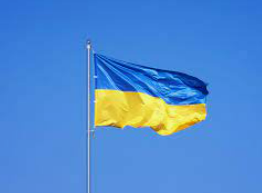
RUSSIAN ATTACK ON THE UKRAINE

Freedom is in great danger in Europe, now more than ever before. 

We should have known this when Putin annexed Crimea in February and March of 2014.   Leaders of the Western world immediately orchestrated a vigorous crescendo of condemnation against Putin and his imperialistic ambitions, and attempted to thwart Russian expanisionism by instigating international sanctions. I fear that western reaction has not been aggressive enough.  The West uses merely words and insufficient sanctions, while Putin uses military might. 

Among the timid, there had been the occasional suggestion of a "dialogue" or a "diplomatic solution",  which not surprisingly, did not transpire. (However, if it did, I imagine it would have played out somewhat like the Munich Agreement from September 1938, where Hitler and Mussoluni met with Chamberlain and Churchill in a mock display of diplomacy.  And Europeans heaved a  great sigh of relief that it was the sign of peace in their day. Well, that's what Chamberlain feverishly proclaimed.)  Putin would not have wasted his time with diplomacy.

Putin has the same imperialistic ambitions as did Stalin and Hitler during WWII.  Those two dictators merged their military might to invade Poland in September 1939.  On the 1st day, the Nazi German armies invaded Polish territory along its' northern, western and southern borders.   The Polish military knew of the imminent attack but were vastly outnumbered and outgunned by the Nazi German war machine.  Then on 17th day the Soviet Red Army invaded along the eastern border of Poland.  This joint invasion resulted in the total collapse of the Polish nation, and territory was split between Hitler and Stalin.

History has taught us many lessons of this era, but we did not pay attention. 

The Ukraine was invaded today!  I was shocked and saddened to watch the video footage on television of bombs exploding and throngs of refugees trying to escape or seek shelter, and children crying. Many innocent Ukraines died today, upon the orders of this evil, monstrous Putin.

It is horrifying that in 2022, we are watching the outbreak of war reminisicent of that which happened in WWII.  

Putin is seeking to restore Russian supremacy and expand not only on European soil, but to dominate the entire world. Putin thinks that he will succeed where Hitler failed.

Putin will not succeed as long as the West and all European nations stand strong.

I am not of Ukrainian descent, but my heart goes out to the people of the Ukraine who are in fear and desperation for their Beloved country, for Peace, for their Dearest families.  My prayers are with you all, Dear Friends of Peace.

I also pray that the leaders of the Western world, particularly, the United States government prevail with courage and power.  I pray that President Biden's decisions will be based on reason and logic. And that when decision is made to take action, that it be swift and hard.  Words are not enough to block the rampage of a delirious despot like Putin, who is bent on murdering innocent people in his path. Down with the Russia empire!  Down with Putin!


God Protect and Bless The Ukraine!!

SLAVA UKRAINI!!

HEROIAM SLAVA!!!


November 2, 2018

NOVEMBER 2 - DAILY CHRONICLES OF HISTORY

NOVEMBER 2

1938

The First Vienna Award was signed on November 2, 1938, a treaty between Nazi Germany and Fascist Italy that was a direct result of the Munich Agreement in the previous month.  The treaty established the partitioning of Czechoslovakia which separated the Magyar-populated territories in southern Slovakia and southern Carpathian Rus from Czechoslovakia, granting them to Hungary.  Thus Hungary regained some of the territories in present-day Slovakia and Ukraine which had been lost in the Treaty of Trianon in the dissolution of the Austro-Hungarian Empire after World War I.   In mid-March 1939, Adolf Hitler granted Hungary permission to occupy the remainder of Carpatho-Ukraine,which extended its territory further north up to the Polish border. This created a common Hungarian-Polish border, which had once existed, prior to the 18th-century Partitions of the Polish-Lithuanian Commonwealth.  In September 1939 when German invaded Poland,  the Polish government and a large part of its military evacuated Poland, escaping to Hungary and Romania, and from there to France to continue fighting against the Nazis.  (nb: After World War II,  the First Vienna Award was declare null and void, at the 1947 Treaty of Paris.)


1940

Greek Hero and Legend of WW2:  Marinos Mitralexis was a Greek Air Force pilot, and hero.  During battle, when he ran out of ammunition, he used his plane to ram into the tail of an enemy bomber.  Upon landing his plane, Mitralexis captured the Italian crew that had parachuted  to safety. It was one of the most extraordinary aviation event in World War Two!  Mitralexis was praised by his countrymen as a war hero and was decorated with numerous medals, including the Gold Cross of Valour, Greece's highest award for bravery.  When Greece capitulated to Germany (April 1941) he and the rest of the surviving Greek Air Force personnel and aircraft escaped to North Africa and joined the Allied forces. (nb. Marinos Mitralexis flew the PZL P.24, a Polish all-metal fighter aircraft.  It was designed by Polish aeronautical engineer Zygmunt Pulawski and produced in the 1930s at the PZL factory in Warsaw.)


1942

General Montgomery broke through Rommel’s defensive line at El Alamein, Egypt, forcing the Nazis to retreat. It marked the beginning of the end of the Axis occupation of North Africa. The operation code-named Supercharge was launched with a seven-hour aerial bombardment directed on Tel el Aqqaqir and Sidi Abd el Rahman, followed by a four and a half hour barrage of 360 guns firing about 15,000 shells. The two assault brigades started their attack at 01:05 on November 2, 1942 and achieved their objectives on schedule, with moderate losses. On the right of the main attack 28th (Maori) battalion captured positions to protect the right flank of the newly formed salient and 133rd Lorried Infantry did the same on the left. New Zealand engineers cleared five lines through the mines allowing the Royal Dragoons armoured car regiment to slip out into the open and spend the day raiding the Axis communications.  Rommel reported to Hitler that: "........the army's strength was so exhausted after its ten days of battle that it was not now capable of offering any effective opposition to the enemy's next break-through attempt ... With our great shortage of vehicles an orderly withdrawal of the non-motorised forces appeared impossible ... In these circumstances we had to reckon, at the least, with the gradual destruction of the army....." Hitler replied -  ordering Rommel to stand ground and not surrender, and told him that "....you can show them no other road than that to victory or death....."


September 30, 2018

SEPTEMBER 30 - DAILY CHRONICLES OF HISTORY

SEPTEMBER 30

1938

The Munich Agreement was signed in the early hours of September 30, 1938 by Hitler, Mussolini, Chamberlain, and Daladier.  The leaders of Britain, France and Italy essentially agreed to permit Hitler to annex the Sudetenland (a portion of Czechoslovakia) on the condition that Hitler would not pursue further annexations. On the same day, Chamberlain returned to England, his plane landing at the Heston Aerodrome. And with smiles on his face he gave this speech.  The following is an excerpt from an archival video:   ".... The settlement of the Czechoslovakian problem, which has now been achieved is, in my view, only the prelude to a larger settlement in which all Europe may find peace. This morning I had another talk with the German Chancellor, Herr Hitler, only this time he has told me that it is his intention to come halfway to meet me (he paused and smiled, as the crowd cheered and applauded)....(he waved a piece of paper triumphantly, smiling, then continued) "....some of you perhaps have already heard what it contains, but I would just like to read it to you....We regard the Agreement signed last night and the Anglo-German naval agreement as symbolic of the desire of our two peoples never to go to war with one another again...." (The speech was followed by roar of enthusiastic cheers from the crowd and more applause.) However, not all British welcomed this agreement.  On the same day about 15,000 gathered in Trafalgar Square to protest the agreement (consisting of three times more than the crowds who welcomed Chamberlain at 10 Downing Street.) But the world did not know this because Chamberlain censored the BBC so that the protest was not reported nor televised.  On March 15, 1939, the Germans invaded and occupied the rest of Czechoslovakia, and on September 1, 1939 invaded Poland, starting World War II.


Polish Ultimatum:  At noon on September 30, 1938 Poland issued an ultimatum to the Czechoslovak government, which demanded the immediate evacuation of Czechoslovak troops, and gave them a deadline of noon the next day.  At issue was an important railway junction city of Bohumín, which Nazi Germany originally demanded from Czechoslovakia.  Polish Colonel Józef Beck assessed that Warsaw would have to take quick action to forestall the German occupation.  At precisely 11:45 a.m. on October 1st,  the Czechoslovak foreign ministry contacted the Polish ambassador in Prague and agreed to the demands.  An area of 801.5 km² with a population of 227,399 people was annexed by the Polish Army under the command of General Władysław Bortnowski.  Germany was delighted with the outcome as it provided fodder for their propaganda machine. The Nazis quickly took the opportunity to  accuse Poland falsely of being accomplices in the partition of Czechoslovakia, in order to confuse the allies, and place the blame of hostilities on Poland.  (note: Poland never collaborated with the Nazi regime and fought against them throughout World War Two.)


1939

The Polish Underground State (1939-1945), also known as the Polish Secret State,  was a collective term for the underground resistance organizations in Poland -  both military and civilian, that were loyal to the Government of the Republic of Poland in exile in London.  The Underground State was established during the final days of the German invasion of Poland. The Secret State was a legal continuation of the Republic of Poland (and all its institutions) that existed before the war. Its objectives were to wage an armed struggle against Nazi Germany and the Soviet Union, as well as administer to civilian matters such as courts of law, education, culture and social services.  The Polish Underground had created the largest underground State in the world. The military sector consisted primarily of various branches of the Armia Krajowa (AK) and, until 1942, the Union of Armed Struggle. Their objective was to prepare all Poles for a future fight to liberate their country.  Their major activities dealt with underground armed resistance, sabotage, intelligence, training, and propaganda.  Polish intelligence operatives supplied valuable intelligence information to the Allies; 43 percent of all reports received by British secret services from continental Europe in 1939–45 came from Polish sources.  The total number of members of Armia Krajowa reached over 400,000, and was recognized as the largest resistance movement during the war.


1944

Warsaw Uprising ended. Polish insurgents were taken prisoners by the Germans and evacuated to POW camps. The next day German troops marched into Warsaw.  After the remaining civilians were found and taken out of the city, the Germans began a systematic destruction of the city of Warsaw, block by block. They used explosives, bombs, and flamethrowers to demolish every house, and every building.  Among the city structures destroyed was an estimated number of 10,455 buildings, 923 historical buildings (94%), 25 churches, 14 libraries including the National Library, the Polish national archives, 81 primary schools, 64 high schools, University of Warsaw and Warsaw University of Technology, and most of the historical monuments. (Note: By January 1945, 85% of Warsaw was razed to the ground (25% as a result of the Uprising; 35% as a result of German actions during the Uprising, and the remainder due to the Warsaw Ghetto Uprising, and the September 1939 Campaign.)  About a million Polish civilians lost all their worldly goods. It is impossible to assess the exact value of the loss of private and public property, as well as loss of priceless works of art, historical monuments, cultural and scientific artifacts, but it was estimated to be about $30 Billion U.S. Dollars (at 1940 evaluation). In 2005 a reassessment was made that the loss had an estimated valued at $54.6 Billion.


August 30, 2018

AUGUST 30 - DAILY CHRONICLES OF HISTORY

AUGUST 30

1940

RAF 303rd Kosciuszko Squadron began air operations. The pilots had been waiting for weeks and desperate to get into the action. Most of them were veterans and experienced in the strategies of aerial battle.  They had to endure weeks of being trained on bicycles by the British commanders at RAF Northolt. Finally the Polish aces had the chance to fly in combat. They scored their first victory (though officially still non-operational) by shooting down a German Messerschmitt Bf 110 of 4./ZG 76 (initially incorrectly recorded as a Dornier Do 17). The wreck was excavated in 1982. Polish pilot F/O Ludwik Paszkiewicz scored the kill during a so-called training flight. He was already an skilled and accomplished pilot.  After Squadron Leader Kellet's personal recommendation, the squadron was declared officially operational next day by No. 11 Group RAF.


Battle of Britain:  Six of the squadron units Hurricanes took off to carry out a mock attack on 6 Blenheim bombers in the St. Albans area. Polish Officer Ludwik Paskiewicz, described the attack in his official report as follows, "After a while we noticed ahead a number of aircraft carrying out various evaluations… I reported it the Commanding Officer, S/Ldr [Squadron Leader] Kellett, by the R/T (radio-telephone), and, as he did not seem to reply, I opened up the throttle and went in the direction of the enemy…Then I noticed, at my own altitude, a bomber with twin rudders – probably a Dornier – turning in my direction…Then I aimed at the fuselage and opened fire from about 200 yards, later transferring it to the port engine, which I set on fire…The Dornier…dived and then hit the ground without pulling out of the dive and burst into flames. I have been firing at an enemy aircraft for the first time in my life." When he returned to base, Paszkiewicz was reprimanded for disobeying orders, but also congratulated for making the squadrons first kill.  (Note:  Paskiewicz'  aerial attack was immortalised in the famous classic scene, "Repeat, please" scene in the film the Battle of Britain.)


1978

Henryk Zygalski died on August 30, 1978. He was a civilian cryptologist with the Polish General Staff's Biuro Szyfrów (Cipher Bureau), housed in the Saxon Palace in Warsaw. He worked there with fellow Poznań University alumni and Cipher Bureau cryptology-course graduates Marian Rejewski and Jerzy Różycki. Together they developed methods and equipment for breaking Enigma messages.  The Polish Underground captured a German Engima machine, which Rejewski and his colleagues worked on breaking the Enigma Code. Before World War Two broke out the Polish mathematicians had already constructed working replicas of the Enigma machine and gave one each to the authorities in England and France.


August 29, 2018

AUGUST 29 - DAILY CHRONICLES OF HISTORY

AUGUST 29

1755

Jan Henryk Dąbrowski (dob) was a Polish general, widely respected after his death for his patriotic fervor, and praised as a national hero.  He served in the Saxon Army and joined the Polish–Lithuanian Commonwealth Army in 1792, shortly before the Second Partition of Poland. He was promoted to the rank of general in the Kościuszko Uprising of 1794. After the final Third Partition of Poland, which ended the existence of Poland as independent country, he became actively involved in promoting the cause of Polish independence abroad. He was the founder of the Polish Legions in Italy serving under Napoleon since 1797. And as a general in Italian and French service he contributed to the brief restoration of the Polish state during the Greater Poland Uprising of 1806. He participated in Napoleonic Wars, taking part in the Polish-Austrian war and the French invasion of Russia until 1813.


1939

Prompted by the British, Germany issued one last diplomatic offer to Poland, with Fall Weiss yet to be rescheduled. The German government replied that it sought the restoration of Danzig but also demanded the Polish Corridor (which had not previously been part of Hitler’s demands). Hitler claimed that these demands were intended to safeguard the German minority in Poland.  However, Hitler gave an ultimatum that he was willing to begin negotiations on the condition that a Polish representative, with signatory powers, would arrive in Berlin the next day.


Peking Plan began.  At precisely 14:15 hours,  Polish destroyers began to sail for British ports, under the command of Komandor porucznik Roman Stankiewicz. The Polish destroyers Błyskawica was commanded by Komandor porucznik Włodzimierz Kodrębski, the Burza by Komandor podporucznik Stanisław Nahorski and the Grom by Komandor porucznik Włodzimierz Hulewicz.  The evacuation had to be conducted in great haste in order to safeguard the Destroyer division of the Polish Navy.  The fleet of the German Kriegsmarine possessed a significant numerical advantage over that of the Polish Navy, and in the event of war, if the Polish vessels remained in the small, landlocked Baltic, they would have been sunk by German attacks.  On August 30, the Germans recalled the tactical unit of three of its cruisers, the Nurnberg, Koln, and Leipzig, from the Baltic Sea,  that were assigned to attack the Polish vessels.  The Polish Destroyers served alongside the Royal Navy for the remainder of the war. ORP Burza and ORP Błyskawica survived the war but ORP Grom was sunk on May 4, 1940 during the Norwegian Campaign, in the Narvik area by a Heinkel He 111 bomber.


Polish Minister of Foreign Affairs, Jozef Beck ordered mobilization, but under the pressure from Great Britain and France, the mobilization was cancelled. When the mobilization finally started, it added to the confusion.


August 25, 2018

AUGUST 25 - DAILY CHRONICLES OF HISTORY

AUGUST 25

1919

Matt Louis Urban, was a United States Army lieutenant colonel who was one of the most decorated American infantry officers of World War II. He performed valiantly in combat on many occasions despite being wounded in action several times. Urban received over a dozen personal decorations for combat from the U.S. Army, including seven Purple Hearts. In 1980, he received the Medal of Honor and four other personal decorations for combat belatedly for his actions in France and Belgium in 1944.


1937

The Polish Operation was a Soviet campaign of state-sponsored murder of Poles that began on August 25, 1937 and lasted until November 15, 1938.  It was the largest ethnic execution and deportation campaign conducted during Stalin's Great Terror against political prisoners in the Soviet Union. It was orchestrated by Nikolai Yezho, head of the NKVD (secret Soviet police). Though Yezho was Stalin's right-hand man, he was eventually arrested and tortured into confessing anti-Soviet activities. Yezho was executed on February 4, 1940.  The NKVD archives documented a total of 139,835 Polish victims. Of this total 111,091 Polish people, and even people accused of having ties with Poland were sentenced to death; the remaining 28,744 Poles were sentenced to Soviet labor camps, called "the dry guillotine" where they perished in a slow and agonizing death due to exposure, malnutrition, and overwork. The Polish Operation marked the peak of persecution of the Poles, which had been ongoing for about a decade.


1938

MS Sobieski was launched in Newcastle. The Sobieski was a Polish passenger ship named in honour of the Polish King Jan III Sobieski.  The vessel was used in the Allied evacuation of western France in 1940 (Operation Ariel), the Battle of Dakar and the campaign in Madagascar. She was also used to transport the British 18th Division to the defence of Singapore.


1939

Poland and Britain signed the Agreement of Mutual Assistance, formalizing Britain's March 31 declaration of support for Poland.  The agreement promised mutual military assistance between the nations in the event either was attacked by a "European country".  In a secret protocol of the pact, Britain offered assistance if Poland were attacked, specifically by Germany. Both the Britain and Poland were bound not to enter agreements with any other third countries which were a threat to the other. On the same day that the agreement was signed, Lord Halifax (British Secretary of State for Foreign Affairs) stated: "We do not think this guarantee will be binding".  A British diplomat, Alexander Cadogan wrote in his diary: "Naturally, our guarantee does not give any help to Poland. It can be said that it was cruel to Poland, even cynical".  When news of this Agreement filtered to Berlin,  Hitler cancelled the invasion of Poland planned for August 26 and moved it up to September 1,  in order to give Germany time to break up the unfavourable international alignment.


At 5:30 p.m. on August 25, 1939, Hitler met with the French Ambassador to Berlin, Robert Coulondre.  In a report to Georges Bonnet, Minister of Foreign Affairs,  Coulonre wrote, "…... Under the circumstances I could make only a brief reply. I told him [Hitler|, first of all, that I knew that all misunderstanding had now been removed; yet that, in a moment as grave as this, I emphatically gave him my word of honour as a soldier that I had no doubt whatever that in the event of Poland's being attacked, France would assist her with all the forces at her command....." Hitler replied, "..... "It is very painful for me to think I might have to fight your country; but the decision does not rest with me. Please tell this to M. Daladier."......  Coulondre stated that he "was unable to prolong the interview any further, and after these remarks I took my leave."  (no.242)


Jabłonków Incident refers to the events that took place on the night of August 25-26, 1939, along the Polish-Slovak border. A group of German Abwehr agents attacked a rail station in Mosty with the objective of capturing the Jablunkov Pass, and its strategic railroad tunnel, until the arrival of the German armed forces.  But the Germans were repelled by units of the Polish Army. The incident is regarded as the prelude to the German invasion of Poland. The Jabłonków Incident has been named the first commando operation of the Second World War.


1941

Tykocin Pogrom:  On the morning of August 25, 1941 the Nazi Germans ordered all Tykocin Jews to assemble in the market square for the purpose of "resettlement" to a ghetto at Czerwony Bór. About 1,400–1,700 people were taken from the square to a killing site in the nearby Łopuchowo forest. The Jewish men were marched on foot, while the women and children were transported by truck. Some local Jews managed to escape and went into hiding, however very few managed to survive.  The SS Einsatzkommando firing squad under the command of SS-Obersturmführer Hermann Schaper, executed the prisoners systematically in wave after wave; the victims, including women, children and the elderly, fell into the execution pits as they were shot.  The executions were carried out throughout the many towns and villages in the Bialystok region,  including Radziłów, Jedwabne, Łomża, Rutki, Wizna, Piątnica, and Zambrów. (Decades after the war, Schaper was brought to justice by German authorities, though initially he was able to deceive them at his first trial in Ludwigsburg.)


1943

Witold Pilecki, a member of the Polish underground resistance, reached Warsaw to report to Home Army (Armia Krajowa, AK)  Headquarters.  He had escaped from Auschwitz on April 26-27, 1943 after two years of imprisonment, and gave his eye-witness reports to Section II (intelligence and counter-intelligence) of the Armia Krajowa (Home Army) regional headquarters.  He had hoped that the AK, backed by the Allies would launch an attack in order to free the camp prisoners. The AK had already suffered the loss of several underground operatives, including a Cichociemny, Stefan Jasieński.  Ultimately it was decided that the AK did not have sufficient strength to capture Auschwitz without Allied help. And the Allies were not receptive to the idea. According to Pilecki's detailed report, (Raport Witolda – Witold's Report) he estimated that "By March 1943 the number of people gassed on arrival reached 1.5 million."  This report, over 100 pages in length, included details about the gas chambers,  the "selektion", and the sterilization experiments conducted on prisoners and documented that Birkenau had three crematoria cremating  8,000 bodies every single day.  Unfortunately, the Office of Strategic Services in London, which received this report, filed it away with a note that the information was considered unreliable. Pilecki's report was later supplemented by another eye-witness account by Jerzy Tabeau (in his "Polish Major's Report"). Tabeau had escaped with Roman Cieliczko on November 19, 1943. These three eye-witness accounts are known as the Auschwitz Protocols, the earliest warnings about the atrocities and mass extermination that took place at the death camp. (Information about Pilecki's underground activities and his persecution by the Soviet NKVD had been suppressed by the communist government after the war. It was only in 1989 that the truth was revealed.)  Witold Pilecki is considered to be one of the greatest war time heroes.  In the foreword to the book "The Auschwitz Volunteer: Beyond Bravery",  the Chief Rabbi of Poland, Michael Schudrich, wrote the following: "When God created the human being, God had in mind that we should all be like Captain Witold Pilecki, of blessed memory."


1944

Warsaw under Siege while Paris was Liberated:  The liberation of Paris was launched by the French Resistance upon the advance of the US Third Army, led by General Patton.  On the night of August 24,  troops of General Leclerc's 2nd French Armored Division entered Paris and reached the Hôtel de Ville just before midnight, followed by the bulk of allied divisions on the morning of August 25. The German garrisons surrendered after four years of occupation. While Paris was liberated, Warsaw  was in flames, and under siege by the Germans. News of the liberation of Paris encouraged the Poles to keep fighting, in the hope that Warsaw would also be liberated.  After Stalin's refusal to support the Warsaw Uprising, Churchill telegrammed Roosevelt to propose sending planes in defiance of Stalin and  'see what happens'.  On August 26, Roosevelt replied, "I do not consider it advantageous to the long-range general war prospect for me to join you in the proposed message to Uncle Joe."  (note: Uncle Joe was their nickname for Stalin)


4th Bombing of Peenemunde:   376 B-17s against the Peenemünde Experimental Station (146), Neubrandenburg Airfield (108) and Anklam Airfield (73); 21 others hit Parow Airfield and 5 hit targets of opportunity; 5 B-17s were lost and 75 damaged; 1 airman was KIA, 9 WIA and 45 MIA. Escort was provided by 171 P-47s and P-51s; they claimed 36-0-28 aircraft on the ground; 2 P-51s were lost. Repairs to Peenemünde Test Stand VII allowed launchings to resume just six weeks after the daylight raid. (Peenemunde was the located of the Nazis V-2 manufacturing and testing center.)


2002

Countess Karolina Maria Adelajda Franciszka Ksawera Małgorzata Edina Lanckorońska was a Polish noble, World War II resistance fighter, and historian. Lanckorońska was active in the Polish resistance and was arrested, interrogated, tortured, tried and sentenced to death at Stanisławów prison. During her incarceration, the local Gestapo chief Hans Krueger confided to her that he had murdered 23 Lwów University professors. She made it her mission to make this confession public knowledge. Because of her family connections, Lanckorońska was spared from execution, but instead was sent to the Ravensbrück concentration camp for women. She survived and, immediately after release in 1945, wrote her war memoirs.  After the war, she left Poland and lived in Switzerland, and later, until her death, in Rome on August 25, 2002.  She was 104.  She never returned to Poland. In her last will and testament, Countess Lanckorońska bequeathed her family's enormous art collection to Poland only after her homeland became free again. The Lanckoronski Collection may now for the most part be seen in Warsaw's Royal Castle and Kraków's Wawel Castle. Her book has been published in English, "Those Who Trespass against Us: One Woman's War against the Nazis.".

August 2, 2018

AUGUST 2 - DAILY CHRONICLES OF HISTORY

AUGUST 2

1934

German President Paul von Hindenburg died.  With the presidential office vacant, Hitler proclaimed himself head of state. (President von Hindenburg had signed the The Reichstag Fire Decree on February 28, 1933, on the advice of Hitler.  The decree nullified many civil liberties of German citizens. With Nazis holding powerful positions in the German government, the decree allowed them to legally imprison anyone considered to be opponents of the Nazi Party. A month after that, Hitler passed the Enabling Act, and proclaimed himself "fuhrer". (see March 24, 1933)


1943

Over three hundred Jews escaped from Treblinka:  On August 2, 1943, Jewish prisoners in Treblinka quietly seized weapons from the camp armory, but were discovered before they could take over the camp. Hundreds of prisoners stormed the main gate in an attempt to escape. Many were killed by machine-gun fire. More than 300 did escape -- though two thirds of those who escaped were eventually tracked down and killed by German SS and police as well as military units. Acting under orders from Lublin, German SS and police personnel supervised the surviving prisoners, who were forced to dismantle the camp. After completion of this job, the German SS and police authorities shot the surviving prisoners.


1944

Stefan Paweł Rowecki died on August 2 1944. He was a Polish general, and the leader of the Armia Krajowa.(Polish Home Army) He was executed by the Gestapo in prison, probably on the direct order of Heinrich Himmler. There have been claims that the arrest of Rowecki on June 30, 1943 was a result of a wider intelligence operation against the Polish Underground State. The Nazis plan was to eliminate top commanders and political leaders of the Polish resistance. During the same period, the Gestapo arrested the commander of National Armed Forces (NSZ), Colonel Ignacy Oziewicz (on June 9, 1943). Then on July 4, 1943, General Władysław Sikorski was killed in a plane crash under mysterious circumstances, which raised suspicions that the Soviet NKVD was somehow responsible.  Within a period of two months, the Polish Army had lost three top commanders. (see June 30, 1943)


1945

Potsdam Conference, held between July 17 and August 2, 1945, was attended by leaders of US, UK and Soviet Union, to decide how to administer the defeated Nazi Germany, which had agreed to unconditional surrender nine weeks earlier, on May 8, (V-E Day). The goals of the conference included the establishment of post-war order, peace treaty issues, and countering the effects of the war. They also agreed on the matter of Poland's border, ie the  provisional western border would be defined by the line along the Oder and Neisse rivers. Silesia, Pomerania, the southern part of East Prussia and the former Free City of Danzig would be ceded to Poland. However the final delimitation of the western frontier of Poland would await the peace settlement (which would take place 45 years later at the Treaty on the Final Settlement with Respect to Germany in 1990). The three leaders all officiallyt recognized the Provisional Government of National Unity (known as the Lublin Poles). This meant, in effect, that the legitimate Polish Government in Exile in London (or the London Poles) had been overthrown (by agreement of Churchill, Roosevelt, and Stalin).  The leaders also assured that Poles who were serving in the British Army "should be free to return to Poland, with no security upon their return to the communist country guaranteed."


Rescue of USS Indianapolis Crew:   On July 30th, the USS Indianapolis was attacked, and sunk with 300 men on board.   900 men were adrift in the ocean struggling to survive on the meager food rations they could find among the debris. They waited four terrifying days, suffering hunger, thirst, exposure, and surrounded by swarms of sharks. Many of the men were attacked and eaten by the sharks; others, in desperation, drank the salt water resulting in madness and death.  On August 2, 1945 at 10:25, while on a routine patrol flight, Lieutenant Wilbur Gwinn, and co-pilot Lt. Warren Colwell accidentally spotted the survivors. They immediately dropped a life raft and radio transmitter,  and contacted Navy Command to dispatch air and surface rescue operations at once.  U.S. Navy Command did not even know about the ship's sinking until the pilot reported it.  The vessel was scheduled to arrived at Leyte on July 31, but no report was ever made that the vessel was overdue.  (The USS Indianapolis had sailed on a secret mission to deliver the components of the atomic bomb called "Little Boy" to Tinian Island. The bomb would later be dropped on Hiroshima. Having unloaded the cargo, the vessel was on its way to Leyte when it was hit by torpedoes from a Japanese submarine.)


March 7, 2018

MARCH 7 - DAILY CHRONICLES OF HISTORY

MARCH 7

1936

Germany Remilitarization:  Hitler sent German military troops into the Rhineland, violating the terms of the Treaty of Versailles and the Locarno Pact. The Rhineland was designated by the Treaty as a demilitarized zone along the Rhine River in western Germany. Two years later, Nazi Germany invaded its territories and annexed Austria and portions of Czechoslovakia. Then on September 1, 1939 Hitler invaded Poland, starting World War Two.


1944

Emanuel Ringelblum, 43, was executed on this day by the Gestapo.  He was a Polish-Jewish historian and social worker.  Ringelblum and his family had been arrested and confined in the Warsaw Ghetto. But unbeknownst to the other inmates, he led a secret operation, code-named Oyneg Shabbos (Yiddish for "Sabbath delight"). In his association with many other inmates, comprising Jewish writers, scientists and ordinary people, he devoted his days to collecting information such as diaries, documents, commissioned papers, and even preserved the posters and decrees that comprised the memory of the doomed Ghetto. And at night he wrote notes. Among approximately 25,000 sheets preserved there are also detailed descriptions of destruction of ghettos in other parts of occupied Poland, the Treblinka extermination camp, Chełmno extermination camp and a number of reports made by scientists conducting research on the effects of famine in the ghettos. Ringelblum was also one of the most active members of Żydowska Samopomoc Społeczna (Polish for Jewish Social Aid), an organization established to help the starving people of the Warsaw Ghetto. On the eve of the Ghetto's destruction in the spring of 1943, when all seemed lost, the archive was placed in three milk cans and metal boxes. Parts were buried in the cellars of Warsaw buildings.  On the night before the Warsaw Ghetto Uprising, Ringelblum and his family escaped from the Ghetto and found refuge on the "Aryan" side of Warsaw, but their whereabouts were quickly discovered by the Gestapo. (they had been hiding at the pre-war address of 81 Grójecka Street)  Ringelblum and his family were arrested and executed in Pawiak Prison, along with the Polish people who had provided them with shelter.


1945

German submarine U-1302 was depth charged and sunk in St. George's Channel ( position 52°19′N 05°23′W ) by depth charges from the Canadian frigates HMCS La Hulloise, Strathadam, and Thetford Mines.


January 30, 2018

JANUARY 30 - DAILY CHRONICLES OF HISTORY

JANUARY 30

1018

The Holy Roman Empire and Poland concluded the Peace of Bautzen. It was a treaty between the Ottonian Holy Roman Emperor Henry II and the Piast duke of the Polans Bolesław I Chrobry which ended a series of Polish-German wars over the control of Lusatia and Upper Lusatia (Milzenerland or Milsko, the eastern part of the margraviate of Meissen (Miśnia)) as well as Bohemia, Moravia and Slovakia.


1667

Treaty or Truce of Andrusovo was signed between Tsardom of Russia & Polish-Lithuanian Commonwealth


1909

Henryk Władysław Magnuski (dob) was a Polish telecommunications engineer who worked for Motorola in Chicago. He was the inventor of the first Walkie-Talkies and one of the authors of his company success in the fields of radio communication.


1933

President Paul von Hindenburg appointed Hitler as Chancellor of Germany.


1938

General Felicjan Slawoj-Skladkowski toured northeastern Poland – counties of Braslaw, Swieciany, Dzisna, and Postawy. concentrated his efforts on improving the state administration, especially police force and civil services. He frequently toured Poland, visiting schools, police stations, manufacturing plants and farm estates.


1939

Hitler made a speech to the Reichstag on the sixth anniversary of the Nazis' coming to power, warning that if "Jewish financiers" started a war, the result would be "the annihilation of the Jewish race in Europe."


1945

On the twelfth anniversary of the Nazis coming to power, a speech by Adolf Hitler was broadcast wearily appealing once again for the German people to keep up a spirit of resistance. It was the last speech Hitler ever made.


While evacuating German civilians, Nazi officials and military personnel from Gdynia, the German military transport ship Wilhelm Gustloff was torpedoed and sunk by the Soviet submarine S-13. 9,400 people died, making it the largest loss of life in a single ship sinking in history.


President Roosevelt and British Prime Minister Winston Churchill met at Malta for four day discussions preparatory to next week's Yalta Conference.


The German historical film Kolberg premiered in Berlin. The film told the story of the Prussian city of Kolberg successfully holding out against a siege by the French during the Napoleonic Wars. It was intended as Nazi propaganda to encourage the German population to continue the fight against the Allies.


October 31, 2012

OPERATION BARBAROSSA: CLASH OF THE TITANS - Conclusion


Operation Barbarossa was the greatest battle ever waged in the history of mankind, and the greatest failure.  Hitler's plans for conquering the Soviet Union were doomed from the start.  Despite early victories, German troops were plagued by an interminable series of setbacks, delays, and grievous losses in troops and war materiel, not to mention the fatal hazards of the Russian winter.  It was a turning point which marked Germany's decline and ultimate defeat and one from which it would never recover.

Nazi Germany's trademark, the surprise blitzkrieg attack, earned them the respect of the Axis, and terror of nations throughout Europe.  However, blitzkrieg was a tactic best applied to countries of smaller size, and was less effective against a country the size and span of western Soviet Union. Nevertheless, Soviet troops were literally caught by surprise, and because of their military unpreparedness, inexperience, and obsolete war machines, were virtually annihilated by a constant barrage of German firepower.  It was "every man for himself" as Soviet troops, led by inexperienced leaders (and in many cases, no leaders at all) struggled against a far stronger and skilled enemy.  Soviet casualties were devastating.

That Soviet troops were so easily overpowered was due to several factors, not the least which was the drastic shortfall of officers in the Red Army.  Years earlier, Stalin decimated vast numbers of his own officer corps, during the purges of the interwar years and the Great Purge of 1936-38. 


Moreover, The Soviet campaign against Finland in 1939-40 (The Winter War) was a dismal failure: the Red Army had 30 times the tanks, 100 times the airplanes, and three times the number of troops than the Finnish armed forces and despite their overwhelming numerical superiority, still could not defeat them. This factor more than any other whetted the German appetite that an invasion into Soviet Union would be fast and easy.  Hitler was adamant about launching an attack in 1941 to take advantage of the Soviets weaknesses.  A year later would have been too late.


Source: Ministry of Foreign Affairs Finland (Photo taken by © SA-kuva)


Though many Soviet bases were established along the new western border of the Soviet Union, they were not sufficiently reinforced, and hence easily overrun by the invading Germans.  Operation Barbarossa has always been referred to as Germany's invasion of the Soviet Union.  Technically speaking, the Germans had actually invaded Soviet-occupied eastern Poland, and other Soviet occupied territories of the Ukraine, Belarus and Lithuania.  Nevertheless, it is not a misnomer that Germany invaded the Soviet Union;  Operation Barbarossa was the spearhead that punctured the "buffer zones", and made an advance possible into the heartland of western Soviet Union - to Leningrad,  to the Caucasus, and finally, an attempt on Moscow herself. 

As if by Providence, heavy rains followed by the arctic cold of a Russian Winter, severely impeded the German advance towards Moscow.  The death toll among German troops began to rise dramatically as they succumbed to frostbite and disease.  On November 27, 1941, General Wagner (Quartermaster General of the German Army) stated:  "We are at the end of our resources in both personnel and material. We are about to be confronted with the dangers of deep winter."
 

Though German command made an intensive research into the failures of  the 1812 Napoleon campaign into the Soviet Union, they failed to heed the lessons of the past and shipped their armies on an ill-fated mission. History was about to repeat itself - but this time on a larger scale.  In one of the many directives issued by Hitler, was one compelling his armies to "stand or die", in the face of Soviet counterattacks. 

The consequences were devastating as casualties mounted into the hundreds of thousands of dead German soldiers.  The Red Army was very much in its element and capable of subduing the enemy, launching a myriad of ferocious counterattacks that forced the Germans to ultimately retreat. The tables were turned.

In a series of "what ifs" many historians have long deliberated about Hitler's decision to delay the attack on Moscow.  Hitler postponed the attack on Moscow against the better advice of his generals opting instead to capture Leningrad, and the oil-rich fields of the Caucasus. To have postponed the capture of the capital city, despite the opportunities, was tantamount, I believe, to virtual sabotage. (If the decision to circumvent Moscow had been ordered by a lowly commanding officer of the corps, he would have been court martialed and executed by a firing squad.)    

The failure of Operation Barbarossa marked the beginning of the end for the Nazi Third Reich.  Nevertheless, for the next five years Germany would fight many more battles against the Soviet Union, and lose as many times -  the battles at Stalingrad - Kursk - Kiev - Berlin were among the most ferocious battles fought between the German and Russian forces - the Titans of WW2.  It proved that Soviet armed forces were capable, tenacious, and

The three major causes leading to the failure of Operation Barbarossa were faulty logistical planning, the weather, and underestimating the strength of Soviet troops.  But there was one other factor that proved to be as deadly - Hitler's arrogant over-confidence. The German Wehrmacht had all the resources to virtually pummel the Soviet Union into submission, but German Command made the fateful error of allocating only part of their resources to the Operation.  If all that Germany had to do was "kick in the front door" they hardly needed to take out the big cannons.


 June 24, 1945 Moscow - Victory Day Parade

Soviet soldiers with flags lowered of the defeated Nazi Reich

Photo by: Yevgeny Khaldei / Waralbum.ru


Operation Barbarossa: Clash of the Titans Index
(Please click on the following links)


OPERATION BARBAROSSA: CLASH OF THE TITANS - Phase Four

Operation Barbarossa: Phase 4:  (October 2, 1941 – December 5,1941)
Operation Typhoon

Following the capture of Kiev, the Soviet forces, including trained reserves were significantly diminished. Stalin deployed reinforcements in a desperate attempt to defend Moscow and had been able to assemble eighty-three divisions comprising of 800,000 troops, however, only twenty-five of these divisions were fully effective. 


Red Army troops parade in Red Square before battle

On October 2nd Operation Typhoon was finally launched and the German advance towards Moscow had begun.  The German plan called for the deployment of two pincer offensives:  the 3rd and 4th Panzer armies which were to cross the Moscow Canal and encircle the city from the northeast.  They succeeded in breaching the Kalinin front and simultaneously destroying the Moscow-Leningrad railway. The Germans attacked Vyzama and Bryansk, entrapping the Soviet 18th 20th, 24th, and 32nd armies, effectively shattering Moscow's first line of defense.


Abandoned German military vehicles on road to Moscow 1941
Meanwhile 2nd Panzer Army advanced towards the south of Moscow Oblast against the Western Front (south of Tula).  They had taken Orvol, located 121 km (75 miles) south of the first main Soviet defense line, and succeeded in encircling the Soviet 3rd and 13th armies.  And 4th Army advanced directly towards Moscow.  Another German plan, code-named Operation Wotan was an integral part of the final phase of the German offensive. Incidentally Wotan was the name given to a Germanic God, venerated during the Middle Ages. 

German troops succeeded in capturing another 673,000 Soviet prisoners, raising the cumulative total of Soviets prisoners to an astounding 3 million.  There remained only 90,000 Soviet soldiers and 150 Soviet tanks to defend the capital city against a massive German barrage.


Soviet soldiers in German POW camp 1941
The German government felt assured that their victory was imminent and  had prematurely released public pronouncements that Moscow was on the verge of collapse and that the Soviet Union would soon be conquered.  On October 13th, the 3rd Panzer Army advanced to within 140 km (90 miles) of Moscow when circumstances changed drastically.  The temperature plummeted and amidst a continuous heavy rainfall, the unpaved roads were quickly transformed into muddy traps slowing down the German advance to no better than a snail's crawl.. Despite the elements, German troops struggled to advance but could only manage about 3.2 km (2 miles) per day.  In the meantime, their supplies dwindled rapidly.
By the end of October, German High Command ordered that Operation Typhoon be halted temporarily while the army units scrambled to re-organize itself. Yet another German delay gave the Soviets the invaluable opportunity to strengthen their own defence lines by bringing in new reinforcements.  In just over a month, Soviet command was able to organize eleven new armies which included 30 divisions brought in from Siberia, backed by 1,000 of their own tanks and 1,000 aircraft. 

German troops were on the verge of exhaustion,  besieged by the enemy, and beleagured by the elements.  It was deja vu. That Napoleon's invasion of Russia suffered the same fate was certainly not overlooked by German Command.  General Gunther Blumentritt had written about it in his diary, thus:  

General Gunther Blumentritt

"They remembered what happened to Napoleon's Army. Most of them began to re-read Caulaincourt's grim account of 1812. That had a weighty influence at this critical time in 1941. I can still see Von Kluge trudging through the mud from his sleeping quarters to his office and standing before the map with Caulaincourt's book in his hand."


By  mid-November the temperature had become so cold that ground had hardened, allowing the resumption of the German advance towards Moscow.  The Soviet 5th, 16th, 30th, 43rd, 49th, and 50th Armies had already dug in, and were waiting along the defense lines.

But the plans ultimately did not work out in favor of the Germans.  After two weeks of ferocious battle, the advance of the German troops towards Moscow was reduced to a virtual crawl. The Germans were exhausted and low on ammunition and fuel.  In the south, 2nd Panzer Army could not advance  - they were being blocked. On November 22 the Siberian units, reinforced by the 49th and 50th Soviet Armies, launched an attack on the 2nd Panzer Army with devastating consequences.  German troops were utterly obliterated. 
Then on December 2nd,  part of the 258th German Infantry Division managed to advance to within 24 km (15 miles) of Moscow, and were able to catch a fleeting glimpse of the Kremlin. And just at the crucial moment, the first Russian blizzard hit with a fury that stopped the Germans in their tracks. Despite this setback, a German reconnaissance battalion had reached the town of Khimki only 8 km distance (5 miles) from Moscow and succeeded in capturing the bridge over the Moscow-Volga Canal, and the railway station.  But it was the end of the line. The Germans could not advance any farther.  

German soldier digging out from the snow Dec 1941


German Soldiers in the winter of Operation Barbarossa 1941

In the meantime, Soviet Command had reinforced its units until over 500,000 troops were positioned near Moscow.  On December 5th, they launched a massive counterattack forcing the German lines back to the west for over 320 km (or 200 miles).


German soldiers surrender to Soviets Dec 1941

Operation Barbarossa was ultimately a disaster from which the Wehrmacht never recovered. The failure to take Moscow marked a turning point which plagued German initiatives for the rest of the war.  German casualties in 1941, amounted to over 210,000 KIA or MIA, and 620,000 WIA (a third of which became casualties after the 1st of October). Casualties among the Axis troops (Hungarians, Romanians, and Finns) are unknown. Soviet casualties were in the millions.

German plans were ill-conceived from the start. No consideration was given for the need to equip their troops with adequate winter uniforms and suffficent supplies. As a result German troops suffered considerably from frostbite and disease.  In addition the severe cold weather had extremely detrimental effects on their war machinery; trucks, artillery and planes were literally stranded and inoperative.  Operation Barbarossa had come to a grinding hat.  Not even appeals to the German god of Wotan could restore German fortunes now.


Next
OPERATION BARBAROSSA: CLASH OF THE TITANS
CONCLUSION
 (Please click here)


October 30, 2012

OPERATION BARBAROSSA: CLASH OF THE TITANS - Phase Three

Operation Barbarossa: Phase Three  (August 5,1941 – October 2, 1941)

By the middle of July, German troops managed to advance to Kiev short of a few kilometers. While 1st Panzer Army veered south, the 17th German Army charged eastward. In the process they succeeded in trapping three Soviet armies between them near Uman, They then proceeded to eliminate the pocket before veering north and crossing the Dnieper.  In the meantime, the 2nd Panzer Army, splitting off from Army Group Centre, crossed the Desna and joined 2nd Army on its right flank and together they succeeded in trapping four Soviet armies and elements of two other enemy forces.


The 4th Panzer Army, reinforced by tanks from Army Group Centre was about to launch its final attack on Leningrad. On August 8th, the Panzers penetrated Soviet defense lines: while the German 16th Army attacked towards the northeast, the 18th Army, backed by an Estonian guerilla formation cleared the area and advanced to Lake Peipus.  By the end of the month, 4th Panzer Army succeeding in advancing within 48 km (30 miles) of Leningrad.
Hitler gave the order to attack Leningrad - and that German forces take no prisoners.  On September 9, Army Group North began its final thrust and in ten days reached as far as within 11 km (7 miles) of Leningrad.  But as the Germans advanced their progress became exceedingly slow and casualties quickly mounted.  


Impatient with the lack of progress, Hitler ordered that instead of storming Leningrad, that German forces had to starve it into submission. (The "Hunger Plan" was established to secure ample food sources for the German armies, while simultaneously starving to death tens of thousands of Soviets and Jews. By 1944 over 4 million Soviets had died of starvation.)  Group Center was stranded, deprived of its Panzer forces and was vulnerable to several Soviet counter attacks. The German units suffered their first major defeat at Yelnya Offensive.

German commanders observe attack on Leningrad 1941

Soviet AA guns guard Leningrad sky Oct 1, 1941


Soviet troops in Leningrad 1941

Consequently, Hitler turned his attention back to Army Group Center and its mission to capture Moscow. He reallocated the 3rd and 4th Panzer Armies, which had been advancing on Leningrad, to instead provide support for Army Group Center. But no thrust towards Moscow would be initiated until operations Kiev had been accomplished. Half of Army Group Centre had veered to the south, behind Kiev, while Army Group South, positioned at the Dniepr bridgehead advanced northward.
 
On September 16th, the Germans succeeded in encircling the Soviet forces in Kiev. Ferocious battle ensued during which the Germans unleashed a heavy barrage of fire power by tanks, artillery and aerial bombardment. The Germans won, after ten days of very heavy fighting. Soviet casualties were 452,720 KIA, 600,000 Soviet soldiers taken prisoners, as well as the confiscation of Soviet weapons - 3,867 artillery guns and mortars from 43 divisions of the Soviet 5th, 37th, 26th and 21st Soviet Armies.


Operation Barbarossa - Capture of Kiev September 19, 1941


Next
OPERATION BARBAROSSA: CLASH OF THE TITANS
PHASE FOUR

OPERATION BARBAROSSA: CLASH OF THE TITANS - Phase Two

Operation Barbarossa: Phase Two: Battle for Smolensk (July 3, 1941 – August 5, 1941)

On July 3rd the German infantry finally caught up with the Panzer division and were given the go-ahead by Hitler to resume their advance eastward.  The timing couldn't have been worse. They were caught in a heavy rainstorm, usual during Russian summers, and were slowed down to a virtual crawl along the muddy roads.  Benefiting from this delay, Soviet troops hastily organized massive troops and launched a ferocious counterattack against Army Group Center.

  
Army Group Center's mission was to reach Smolensk, an important Soviet command post, and were headed straight towards six Soviet armies poised and waiting along the defensive line  On July 6th the Soviets backed with 700 tanks launched an attack on the 3rd Panzer Army but were ultimately repulsed.  The Germans easily defeated the Soviets, backed with overwhelming air superiority.

Operation Barbarossa - city of Smolensk heavily bombed by German JU87s

Operation Barbarossa 1941: Soviet soldiers surrender to the German

The 2nd Panzer Army crossed the Dnieper and advanced on Smolensk from the south, while 3rd Panzer Army (which defeated the Soviet attack) advanced on Smolensk from the north. Caught in the German pincer were three Soviet armies.  By July 18th the Panzers attempted to close the gap, and were within ten miles of accomplishing their objective, however the trap would not close until July 26.  The Germans captured 300,000 Red Army soldiers but it would be another ten days before the pocket could be liquidated.  During that time about 100,000 Red Army soldiers managed to escaped, and quickly repositioned their troops for the defense of Moscow.


                                     Soviet soldiers captures by German army - detained in POW camps


Trainloads of Soviet POWs shipped to Germany. None survived.


It took all of four weeks for German Command to realize that they had seriously underestimated the strength of Soviet armed forces.   German troops had been deployed with insufficient supplies, which had very quickly diminished to alarming levels.  It became imperative for them to slow down operations long enough in order to permit reinforcements to catch up with them.  In the face of such  interminable delays, German troops were faced with the gravity of their predicament, and were desperate in their efforts to strengthen their positions.  The situation was hopeless.

Soviet AA guns aimed at enemy German planes Aug 1941

The original plan of encirclement had failed dismally, as huge numbers of Soviet units succeeded in escaping the German pincers.  Consequently, Hitler was convinced that the only way of defeating the Soviets was to destroy their economic resources and bring enemy forces to a virtual halt.  But in order to achieve that objective, the Germans would have to launch a two pronged attack:  to seize the main industrial zones of Kharkov, the Donets Basin, and the oil fields of the Caucasus in the south, and the capture of Leningrad (a vital military center)  in the north.
Hitler shakes hands with von Bock

Hitler's plans were met with blistering outrage from his generals, in particular Fedor von Bock, who demanded that German troops had to attack Moscow outright. The capital city was a major center for arms production, as well as the vital epicenter of Soviet communications and transportation.  Moreover, the capture of Moscow would have had enormous psychological impact on the enemy's morale.  Reports from German intelligence indicated that Soviet troops had been heavily deployed in and around Moscow.  It would not be an easy invasion.  Irregardless, Hitler stubbornly refused to heed the warnings and, undermined his own Commanding Officer, by giving Guderian the order to dispatch Army Group Centre tanks to the north and south.  Moscow would have to wait for now.


Next
OPERATION BARBAROSSA: CLASH OF THE TITANS
PHASE THREE