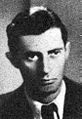
Showing posts with label Stefan Rowecki. Show all posts

August 2, 2018

AUGUST 2 - DAILY CHRONICLES OF HISTORY

AUGUST 2

1934

German President Paul von Hindenburg died.  With the presidential office vacant, Hitler proclaimed himself head of state. (President von Hindenburg had signed the The Reichstag Fire Decree on February 28, 1933, on the advice of Hitler.  The decree nullified many civil liberties of German citizens. With Nazis holding powerful positions in the German government, the decree allowed them to legally imprison anyone considered to be opponents of the Nazi Party. A month after that, Hitler passed the Enabling Act, and proclaimed himself "fuhrer". (see March 24, 1933)


1943

Over three hundred Jews escaped from Treblinka:  On August 2, 1943, Jewish prisoners in Treblinka quietly seized weapons from the camp armory, but were discovered before they could take over the camp. Hundreds of prisoners stormed the main gate in an attempt to escape. Many were killed by machine-gun fire. More than 300 did escape -- though two thirds of those who escaped were eventually tracked down and killed by German SS and police as well as military units. Acting under orders from Lublin, German SS and police personnel supervised the surviving prisoners, who were forced to dismantle the camp. After completion of this job, the German SS and police authorities shot the surviving prisoners.


1944

Stefan Paweł Rowecki died on August 2 1944. He was a Polish general, and the leader of the Armia Krajowa.(Polish Home Army) He was executed by the Gestapo in prison, probably on the direct order of Heinrich Himmler. There have been claims that the arrest of Rowecki on June 30, 1943 was a result of a wider intelligence operation against the Polish Underground State. The Nazis plan was to eliminate top commanders and political leaders of the Polish resistance. During the same period, the Gestapo arrested the commander of National Armed Forces (NSZ), Colonel Ignacy Oziewicz (on June 9, 1943). Then on July 4, 1943, General Władysław Sikorski was killed in a plane crash under mysterious circumstances, which raised suspicions that the Soviet NKVD was somehow responsible.  Within a period of two months, the Polish Army had lost three top commanders. (see June 30, 1943)


1945

Potsdam Conference, held between July 17 and August 2, 1945, was attended by leaders of US, UK and Soviet Union, to decide how to administer the defeated Nazi Germany, which had agreed to unconditional surrender nine weeks earlier, on May 8, (V-E Day). The goals of the conference included the establishment of post-war order, peace treaty issues, and countering the effects of the war. They also agreed on the matter of Poland's border, ie the  provisional western border would be defined by the line along the Oder and Neisse rivers. Silesia, Pomerania, the southern part of East Prussia and the former Free City of Danzig would be ceded to Poland. However the final delimitation of the western frontier of Poland would await the peace settlement (which would take place 45 years later at the Treaty on the Final Settlement with Respect to Germany in 1990). The three leaders all officiallyt recognized the Provisional Government of National Unity (known as the Lublin Poles). This meant, in effect, that the legitimate Polish Government in Exile in London (or the London Poles) had been overthrown (by agreement of Churchill, Roosevelt, and Stalin).  The leaders also assured that Poles who were serving in the British Army "should be free to return to Poland, with no security upon their return to the communist country guaranteed."


Rescue of USS Indianapolis Crew:   On July 30th, the USS Indianapolis was attacked, and sunk with 300 men on board.   900 men were adrift in the ocean struggling to survive on the meager food rations they could find among the debris. They waited four terrifying days, suffering hunger, thirst, exposure, and surrounded by swarms of sharks. Many of the men were attacked and eaten by the sharks; others, in desperation, drank the salt water resulting in madness and death.  On August 2, 1945 at 10:25, while on a routine patrol flight, Lieutenant Wilbur Gwinn, and co-pilot Lt. Warren Colwell accidentally spotted the survivors. They immediately dropped a life raft and radio transmitter,  and contacted Navy Command to dispatch air and surface rescue operations at once.  U.S. Navy Command did not even know about the ship's sinking until the pilot reported it.  The vessel was scheduled to arrived at Leyte on July 31, but no report was ever made that the vessel was overdue.  (The USS Indianapolis had sailed on a secret mission to deliver the components of the atomic bomb called "Little Boy" to Tinian Island. The bomb would later be dropped on Hiroshima. Having unloaded the cargo, the vessel was on its way to Leyte when it was hit by torpedoes from a Japanese submarine.)


September 22, 2011

Warsaw Uprising 1944: September 22 Poles Refuse To Surrender

German envoys have proposed capitulation of the Czerniakow district. Poles refused to concede but have called for a cease-fire to allow civilians and the injured to evacuate the area. Soviet Command of the First Division have promised Polish defenders assistance for the evacuation to the right bank of the Vistula. Still, no rescue attempt has been forthcoming. Many insurgents had attempted to swim across the Vistula while others fought their way towards City Centre Sector Centre, but without success. Meanwhile Captain Ryszard Bialour "Jerzy" and Major Stanislaw Latyszonek had decided to break through to Srodmiescie South. German units under the command of General Heinz Rohr have launched an all-out general attack on the district of Mokotow.


Witold Pawel Szredzi
Major Witold Pawel Szredzi, code name "Sulima" was the Commander of the Grodek Jagiellonski Inspectorate in September 1943 and the leader of the "San" group during Operation Tempest,  In August 1944 Szredzi led the same group beyond the river San, but on August 16 was summoned to Warsaw by the Home Army Commander. As he led his troops back to the beleaguered city, Soviet units surrounded Szredzi and his men, but Szredzi managed to escape capture. Upon reporting to the "Warta" units he took command of Battalion "C" (Postcript: On June 1, 1946 he was arrested by the WSR (Pol. Wojskowy Sad Rejonowy - Regional Military Court) in Wcroclaw and sentenced to death, but it was then changed to 15 years imprisonment. He was released on May 1, 1956.

These military courts were established under the decree of the PKWN, the Soviet-backed Polish Committee of National Liberation. They are authorized to investigate so-called "crimes of state" and have arrested hundreds of officers of the Polish Home Army on trumped up charges. (By the end of the war, and into the early years of the Cold War, the WSR will have issued about 3,500 death sentences, with more than 1,300 executions carried out.)

Stefan Rowecki
Operation Tempest, or Operation Storm (Akcja Burza) was the plan of General Stefan Rowecki, Chief of the Home Army, to instigate an uprising against the Germans. It took place in three stages: first in the eastern frontier, with main attacks at Lviv and Vilnius the second stage between the Curzon Line and the Vistula River followed by the third stage over the rest of Poland. The plan entailed cooperation with the Red Army on a tactical level. Polish Home Army units planned to precede the advancing Red Army in liberating German occupied territories but the lack of Soviet assistance and the overwhelming military might of the German Wermacht put an end to Operation Storm. 

In 1941 Rowecki organized large-scale sabotage operations against the Germans in territories east of the Polish borders Wachlarz. On June 30, 1943 he was arrested by the Gestapo in Warsaw and sent to Berlin. There, he was interrogated by prominent Nazi officials such as Ernst Kaltenbrunner, Heinrich Himmler and Heinrich Muller. They offered him an "anti-bolshevik alliance" but Rowecki refused. He was executed sometime in August 1944 by the Nazi Sachsenhausen.

Ludwik Kalstein
Blanca Kaczerowska
Rowecki's arrest was due to the betrayal of Ludwik Kalstein "Hanka", Eugeniusz Swierczewski "Genes" and Blanca Kaczerowska "Sroka". They were both members of the Polish Armia Krajowa (Home Army) but secretly collaborated with the Gestapo. The Secret War Tribunal of the Polish Secret State sentenced them to death for high treason. The execution of Swierczewski was carried out by Polish troops under the command of Stefan Rys "Jozef"; Swierczewski was hanged in the basement of the house at 74 Krochmalna Street in Warsaw. Kalkstein could not be harmed as he was under the protection of the Gestapo. He fought in a unit during the Warsaw Uprising under the name of Konrad Stark. After the war he worked for the Polish Radio station in Szczecin and was later recruited as an agent by the Urząd Bezpieczeństwa. In 1982 he emigrated to France; he died in 1994. The death sentence against Blanka Kaczorowska was not carried out because she was pregnant at the time. After the war she also worked as a secret agent for the Urząd Bezpieczeństwa and later for the renamed Służba Bezpieczeństwa. She emigrated to France in 1971.

On January 2, 1944 Russian forces of the 2nd Belarusian Front crossed Poland's prewar border. During that time, Polish civilians were being massacred at Volhynia. The massacres were carried out by the Ukrainian Insurgent Army (UPA) in Eastern Galicia and Volhynia in July and August of 1943. UPA Commander Dmytro Klyachkivsky ordered that all Polish males between the ages of 16 and 60 be liquidated but most of the victims were women and children. By the end of the bloodletting, between 40,000 to 60,000 Polish civilians were slaughtered in Eastern Galicia and between 2,000 to 3,000 in Volhynia. The Bandera faction of the Organization of Ukrainian Nationalists were responsible for the killings. Their objective was to purge all non-Ukrainians from a future Ukrainian State. A Ukrainian Orthodox Pope gave this blessing to his congregation in Volhynia in 1943: "Fellow Christians-Ukrainians! Butchering the Poles is your duty, and there will be independent Ukraine. ... and on that slaughter I bless you."

Polish Victims of the Volhynia Massacre July - August 1943
During the massacres, the 27th Polish Home Army Infantry Division was formed to help in local self-defense of Polish residents and to fight against the Ukrainian Insurgent Army and German Wermacht. Despite orders by the Polish government not to harm Ukrainian civilians, the Polish Home Army conducted retaliatory strikes against villagers, burning down Ukrainian houses and killing ethnic Ukrainians.

The Polish Division was the largest partisan unit in central Europe numbering about 7,300 soldiers, officers, and NCOs. Hence Operation Storm was put into action. Joint Polish-Soviet units succeeded in recapturing Kowel (on April 6) and Wlodzimierz. After reaching the front line, the Soviet proposed that the Polish Divison be combined with that of the Soviet Red Army. Polish Colonel Jan Kiwerski "Olivia" refused and his Division returned to partisan fighting. Over the span of two weeks, German troops virtually decimated the Polish army. Though the Soviet promised to provide help, none ever came. Polish casualties reached up to 50 %.

Polish troops had to retreat westward and were attacked by not only German forces but Soviet forces as well. Polish soldiers were taken prisoner by the Soviets and given the "choice" of joining the Red Army or being deported to Soviet gulags. Only a small number joined the Soviet army. Remnants of the Polish Division made it across the Bug River on June 7 and linked up with other Home Army units. Together they took part in the liberation of Kock, Lubartow and Firley on July 21, 1944.


27th Home Army Infantry Division Poland 1944


February 17, 2011

SPY WEEK Famous Polish Spies - Stefan Rowecki

Stefan Paweł Rowecki

Pseudonym: Grot, "Spearhead,"

Stefan Grot-Rowecki, ( 25 December 1895 - 2 August 1944) was a Polish general, journalist and the leader of the Armia Krajowa (Home Army).  He was murdered by the Gestapo in prison on the direct order of Heinrich Himmler.

Rowecki was born in Piotrków Trybunalski and was one of the organizers of the secret scouting organization. During World War I he was conscripted into the Austro-Hungarian army and later in to the First Brigade of the Polish Legion. In August 1917 he was interned in  after the majority of his unit had refused to pledge loyalty to the Emperor of Austria. He was released in February 1918 from the internment camp in Beniaminów and joined the Polnische Wehrmacht, and after the establishment of the newly independent Poland, he joined the Polish Army.

Rowecki fought in the Polish-Soviet war (1919–1920) after which he remained in the army and organized the first military weekly periodical (Przegląd Wojskowy). From 1930 to 1935, he commanded the 55th Infantry Regiment in Leszno.


World War II
Though Rowecki began organizing the Warsaw Armoured Motorized Brigade (
Warszawska Brygada Pancerno-Motorowa, 7TP, TKS tanks)in June 1939, it did not reach full mobilization when Germany invaded Poland on 1 September 1939.  His unit did however take part in the defense of Poland.

After the Polish defeat, Rowecki was able to evade capture and returned to Warsaw. The following month, Rowecki became one of the leaders, then commander (in 1940) of the Związek Walki Zbrojnej. From 1942, he was commander of the Armia Krajowa (Home Army).


In 1941, Rowecki organized sabotage in the territories east of the Polish pre-war borders
Wachlarz. On 30 June 1943 he was arrested by the Gestapo in Warsaw and sent to Berlin, then imprisoned at Oranienburg. There he was questioned by many high-ranking Nazi officials including Ernst Kaltenbrunner, Heinrich Himmler and Heinrich Müller. They offered him an anti-bolshevik alliance, but refused. He was in Sachsenhausen, probably in August 1944.

Rowecki's arrest was due to his betrayal by Ludwik Kalkstein "Hanka", Eugeniusz Swierczewski "Genes" and Blanka Kaczorowska "Sroka" who were Gestapo agents. All were members of the Home Army but in fact collaborated with the Gestapo.


Ludwik Kalkstein "Hanka"
Eugeniusz Swierczewski "Genes"
Blanka Kaczorowska "Sroka"
Swierczewski, Kalkstein and Kaczorowska were sentenced to death for High Treason by the Secret War Tribunal of the Polish Secret State. The sentence on Eugeniusz Swierczewski was carried out by troops commanded by Stefan Rys ("Jozef"). They hanged Swierczewski in the basement of the house at 74 Krochmalna Street in Warsaw. Kalkstein received protection from the Gestapo and was not harmed. He went on to fight with a Waffen SS unit during the Warsaw Uprising of 1944 under a fictitious name of Konrad Stark. Following the end of World War II, he worked for the Polish Radio station in Szczecin and was later recruited as an agent by the Urząd Bezpieczeństwa. In 1982, he emigrated to France. Blanka Kaczorowska also survived the war. Her death sentence was not carried out because she was pregnant. at the time. After the war, she also worked as a secret agent for the Urząd Bezpieczeństwa and later for the renamed Służba Bezpieczeństwa. She emigrated to France in 1971.

There have been claims circulating that the arrest of Rowecki was the result of a broader intelligence operation at work with the objective of eliminating the top commanders and leaders of the Polish Resistance of the
Polish Underground State.

The Gestapo also arrested the commander of Narodowe Siły Zbrojne (NSZ), Colonel Ignacy Oziewicz on 9 June 1943 and barely a month later, General Wladysław Sikorski died in plane crash under mysterious circumstances. Within a period of two months, the Polish Army had lost three top commanders. The controversy continues to this day.


Medals
Order of the White Eagle, posthumously (11.11.1995)
Virtuti Militari Golden Cross (1942)
Virtuti Militari Silver Cross (1923)
Polonia Restituta IV class
Cross of Valour 8 times, 4 times for Polish-Soviet War and 4 times for Polish Defensive War of 1939
Cross of Merit I class
Cross of Independence
Medal Pamiatkowy za Wojne 1918-1921
Medal 10 lecia Odzyskania Niepodleglosci
Armia Krajowa Cross, posthumously (1967)
Gwiazda Wytrwalosci, posthumously
Legion of Merit Commander, posthumously by Ronald Reagan (USA 9.8.1984)
Légion d'honneur Officers Cross (France 1937)


Order of the White Eagle
Virtuti Militari Golden Cross
Virtuti Militari Silver Cross
Order of Polonia Restituta
Cross of Valor
Cross of Merit 1st Class
Cross of Independence
Medal Pamiatkowy za Wojne 1918-1921
Medal 10 lecia Odzyskania Niepodleglosci
Armia Krajowa Cross
Gwiazda Wytrwalosci
Legion of Merit Commander
Légion d'honneur Officers Cross


source: Wikipedia

Recommended Links:
Wladyslaw Sikorski
Home Army and Warsaw Uprising


Editors Note:  FYI:  The images of medals posted here may or may not be the exact version which was awarded to the recipient.  There are several classes for each medal depending on various factors such as type of military (or civilian) service, rank of officer (or soldier), class of award, year in which it was awarded, etc   The lack of sufficient information on the web (or omission) has compounded the difficulty in selecting the correct class of medal. I apologize for any inaccuracies.