Showing posts with label Lech Walesa. Show all posts

November 25, 2018

NOVEMBER 25 - DAILY CHRONICLES OF HISTORY

NOVEMBER 25

1795

Stanisław II Augustus Poniatowski was coronated on November 25, 1795.  He was King of Poland, Grand Duke of Lithuania, and the last ruling monarch of the Polish-Lithuanian Commonwealth from 1764 to 1795.  He remains a controversial figure in Polish history. Though he was recognized as a great patron of the arts and sciences, and was praised for initiating and supporting progressive reforms, the Poles criticized that his reforms did not go far enough and that he was overly cautious, the latter which he overtly admitted.  He did not stand up against the partitions nor prevent the destruction of the Polish state. His election to the throne was marred by Russian interference and intervention.  ( The Russians spent about 2.5 million rubles to help in his election.)  In the years following the Second Partition of Poland, he was accused of weakness, subservience, and even of treason.  (nb. After Poniatowski arrived at the Russian imperial court in Saint Petersburg in 1755, he became romantically involved with the future empress of Russia, Catherine the Great.  Due to her influence, and connivance, Poniatowski was elected King of Poland in 1764.  His attempts to implement reforms were futile, and were met with fierce opposition from Prussia, Russia and Austria, all of which intended to keep the Polish-Lithuanian Commonwealth weak.  )


1937

The ORP Błyskawica was commissioned on November 24, 1937 and served during World War Two. She was the second of two Grom ("Thunderbolt") class destroyers built for the Polish Navy by J. Samuel White, of Cowes, in 1935–37. These ships were among the most heavily armed and fastest destroyers operating during World War II.  On August 30, 1939, just two days before the war broke out, the Blyskawica, along with the destroyers Grom and Burza, secretly withdrew from the Baltic Sea and sailed to Britain. This was in  accordance with the secret Peking Plan, in order to avoid open conflict with Germany and possible destruction of its navy. They reached Leith, Scotland at 17:30 on September 1, 1939, just as Nazi Germany was unleashing its Blitzkrieg on Polish territory.  On September 7,  1939, the Blyskawica joined the British Royal Navy's Home Fleet, and attacked a Nazi U-Boat. The Blyskawica is the only Polish Navy vessel to have been decorated with the prestigious Virtuti Militari, Poland's highest military order for heroism and leadership. She is now preserved as a museum ship in Gdynia and is the oldest preserved destroyer in the world. 


1944

As Soviet troops were advancing closer, Himmler ordered the destruction of Auschwitz gas chambers and crematoria.  The Nazi SS forced the prisoners to dismantle the structures and dynamite them. (Editors note:  There are still revisionists who claim that Himmler's decision to stop the cremation of the Jews, in defiance of Hitler's orders, could have been due to some sudden manifestation of, consciousness or awareness. This is not true. The only reason for ceasing the gassing operations, was to systematically dismantle the ghastly "evidence" of the Nazi killing machines,  Please refer to primary sources of information, that is, archived documents related to the Nuremberg Trials, the Auschwitz Trials, and the International Military Tribunal. )


1947

Auschwitz Trial began in Krakow on November 25, 1947.  Poland's Supreme National Tribunal brought to court 40 former Auschwitz staff as well as the commandant Arthur Liebehenschel, as well as 34 men and four women who had functioned as guards or doctors in the camps.  On December 22, 1947, the trials ended with 23 death sentences, 7 life sentences, and 9 prison sentences which ranged from three to fifteen years. The only person that was acquitted was Hans Münch, an SS doctor who had several former prisoners testify on his behalf.  The following is an explanation given of the Jury Decisions:  "......Torturing of prisoners [of Auschwitz] already tormented to the extreme [by extrajudicial means], is the evidence of inhuman savagery perpetrated by those defendants who as a result of the trial were sentenced to death. The listed violent crimes committed by named defendants, who all took smaller or larger part in the mass murder of prisoners, also reveal that the accused were involved in the acts of killing for pleasure, and not pursuant to orders of their superiors. If it were not for their expressed desire to kill, they would have otherwise displayed elements of sympathy for the victims, or at least show indifference to their plight, but not torture them to death....."


1990

Lech Wałęsa won in Poland's first popular election. The first round of elections was held on November 25,  1990, with a second round on December 9.  This was the first direct presidential elections to be conducted in the history of Poland, and the first free presidential elections since the May Coup of 1926. Prior to World War II,  the Polish presidents were elected by the Sejm. During the Communist era (1952 to 1989), the presidency was replaced by the State Council of Poland, which dealt with most of the presidential duties, and whose chairman was regarded as equivalent to a president. Lech Walesa, leader of the Solidarity movement (Solidarnosc)  won the first round, but since he did not win 50% of the vote, it lead to a runoff election, where he faced his opponent Stanislaw Tyminski, a Polish-Canadian businessman, in the second round. Walesa defeated him easily. ( Despite Tymiński's defeat, he had not only humiliated Mazowiecki (one of the best-known and most-respected figures in Polish politics), but also forced Wałęsa (who at that time was a national hero) into a runoff. After the election Tymiński tried to establish a new political party, but quickly disappeared from the political scene in Poland.)


2005

Polish Minister of National Defence Radek Sikorski officially opened the Warsaw Pact archives on November 25, 2005 to the public. Sikorski commented that some of the documents indicated that the Soviets were prepared to use nuclear weapons in Europe as part of a war with NATO. Also revealed were maps of possible nuclear strikes against Western Europe, including nuclear annihilation of 43 Polish cities by Soviet-controlled forces. He also reported that he was going to donate more than 700 files that were previously secret until now to the Polish National Remembrance Institute.   This is vital information that sheds light on the real events, and how Poland was "kept as an unwilling ally of the Soviet Union during the Cold War."  Other documents shed new light about the Soviet invasion of Czechoslovakia.


November 14, 2018

NOVEMBER 14 - DAILY CHRONICLES OF HISTORY

NOVEMBER 14

1918

On November 14, 1918, Piłsudski was asked to supervise the provisional government of Poland. Several days later he was officially bestowed the title of Provisional Chief of State of the Second Polish Republic, by the government of Jędrzej Moraczewski.  After Poland re-emerged as a nation-state following the end of WWI, Pilsudski was in command of Polish forces in six border wars.  In the Polish-Soviet War, Pilsudskis' forces seemed on the verge of defeat, but in August 1920 the Battle of Warsaw, the Poles succeeded in defeating the invading Soviets, to their utter humiliation.  In 1923 Pilsudski withdrew from active politics (the Polish government was under control of his opponents, in particular the National Democrats.) Three years later he returned to power in the May 1926 coup d'état and became Poland's supreme leader. Jozef Pilsudski is regarded as the Father of the Second Polish Republic.


1982

Polish Solidarity Chairman Lech Wałęsa was freed on November 14, 1982 after having been imprisoned for 11 months.  He and other Solidarity activists were arrested following the crackdown imposed by General Wojciech Jaruzelski.  Walesa is the founder of the Solidarity movement (Solidarnosc), and was relentlessly persecuted, surveilled, and arrested several times by the Communist authorities. In August 1980 he was instrumental in political negotiations that led to the ground-breaking Gdańsk Agreement between striking workers and the government.   He was also prominent in the establishment of the 1989 Round Table Agreement that led to semi-free parliamentary elections in June 1989 and to a Solidarity-led government.  In the Polish general election of 1990, Wałęsa successfully ran for the newly re-established office of President of Poland. He presided over Poland's transition from communism to a post-communist state, but his popularity waned and his role in Polish politics diminished after he narrowly lost the 1995 presidential election.  In 1983, Wałęsa was awarded the Nobel Peace Prize.  Moreover, he has received more than 30 state decorations and more than 50 awards from 30 countries, including Order of the Bath (UK), Order of Merit (Germany), Legion of Honour (France) and European Human Rights Prize (EU 1989). In 2011, he declined to accept the Lithuanian highest order, citing his displeasure at Lithuania's policy towards the Polish diaspora.  In the United States, Wałęsa was the first recipient of the Liberty Medal, in 1989. In the same year, he was also presented with the Presidential Medal of Freedom, and became the first non-head-of-state to address a joint meeting of the United States Congress.  Quote from Walesa:  "My most ardent desire is that my country will recapture its historic opportunity for a peaceful evolution and that Poland will prove to the world that even the  most complex situations can be resolved by a dialogue and not by force."


1990

The German–Polish Border Treaty was signed on November 14, 1990,  finally settling the Polish–German border, an issue which was pending since the end of World War II in 1945.  The treaty was signed by the foreign ministers of Poland and Germany, Krzysztof Skubiszewski and Hans-Dietrich Genscher, in Warsaw, ratified by the Polish Sejm on November 25, 1991 and the German Bundestag on December 16, 1991.  Among the terms of the Treaty, Poland and Germany declared that the frontier between them was inviolable now,  and hereafter, and mutually pledged to respect their sovereignty and territorial integrity, and a mutual declaration that they have no territorial claims against each other and shall not raise such claims in the future.  In the ratification process at the Bundestag,  there were 13 dissenting votes by deputies of the CDU/CSU faction, among them Erika Steinbach and Peter Ramsauer.


October 22, 2012

JP2 DAY: POPE JOHN PAUL II, THE GREAT

In the span of two thousand years there have been only four Popes who were bestowed with the title of Greatness. Pope John Paul II (Karol Wojtyla) was the fourth Pope to receive such an acclamation.

The first was Pope St. Leo I. In the year 452 Leo was one of three envoys sent by Emperor Valentinian III to meet with Attila the Hun at Mincio, near Mantua (Lombardy) Italy. The hordes invaded and pillaged numerous cities in northern Italy, as well as the city of Aquileia, razing it to the ground without a trace. (Aquileia was of great strategic importance. It had been the center from which government, commerce and military defense was conducted, and was the location of the imperial residence.) Rome was the next target of the Huns. Though the details of the negotiations have been lost in antiquity, historians speculate that Leo I was instrumental in persuading Attila to withdraw his troops. According to Paul the Deacon (8th century) Leo I was a man of imposing presence - a huge man dressed in priestly vestments, and armed with a sword (visible only to Attila). Apparently the visual impact proved to be an effective deterrent. (However one cannot know if this was fact or merely folklore). Nevertheless, Attila the Hun withdrew his armies and Rome was spared.

The second Great Pope was Gregory I, (590 - 604) who has been referred to as the "Father of Christian Worship". He established numerous liturgical reforms, and revived the Church's missionary work, in particular to the pagans in Anglo-Saxon England. Leo I was a prolific writer amassing over 850 works during the last decade of his papacy. He often bemoaned the burdens of office, and wished to immerse himself in the seclusion and silence of prayer that he once enjoyed as a monk.

Pope Nicolas I was the third Great Pope reigned from circa 800 to 867, and had a decisive influence on the development and power of the papacy.  He proclaimed that the pope should possess suzerain authority in matters of faith and morals, over all of Christian Western Europe, even royalty.  He encouraged the missionary activity of the Church, and took corrective measures whenever Bishops neglected their duties.l

Karol Wojtyla - John Paul II was the fourth Greatest Pope, whose achievements are unprecedented in the history of the Church. He was the second-longest serving Pope and the first non-Italian since 1523 to be elected to the Papacy. During his pontificate Pope John Paul II had visited 129 countries, traveling a total of 1,100,000 kilometers (680,000 miles). He beatified 1,340 people, and canonised 483 saints - an immense accomplishment, surpassing the sum total of equivalent works by all his predecessors.


He was the first Pope to pray at an Islamic Mosque in Damascus, Syria, and at the Western Wall in Jerusalem. By example John Paul II showed the faithful how to pray, and rallied the youth of the world into the laity of the Church. His goal was to transform the Catholic Church into one which would nurture peace and create an alliance among the three great religions of the world: Judaism, Islam and Christianity.


Pope John Paul II praying at Western Wall, Jerusalem March 26, 2000


Pope John Paul II at a Turkish Mosque among Muslim clerics


Pope John Paul II condemned apartheid, and was an outspoken critic of war.  He fervently believed that "Wars generally do not resolve the problems for which they are fought and therefore....prove ultimately futile."

His greatest achievement was the defeat of Communism in Poland, which set off a domino effect.One by one, communist regimes throughout eastern Europe began to topple, which culminated in the disintegration of the Soviet Union. Pope John Paul II was indeed the greatest leader of the 20th century. To his beloved homeland and to the world, Pope John Paul II was venerated as a living saint and saviour who paved the way for Poland's eventual liberation and the end of the Cold War.

Karol Wojtyla's first papal visit to Poland in June 1979 electrified the spirit of the Polish people, long oppressed under brutal totalitarianism. Rather than obstruct the Pope's visit, communist authorities were quite willing to permit it, using the occasion as an opportunity to demonstrate that, despite the Pope's Polish roots, his official visit would not be a sign of change to come. The Soviet regime was complacent in the belief that the status quo would remain intact, and anticipated that the Pope would abide by the rules, hence setting an example for the Polish people to follow.

Incidentally, when Karol Wojtyla was elected the new Pope in 1978, Soviet leader Leonid Brezhnev was reported to have declared the event as utterly meaningless. He asked "How many soldiers does he have in his army? None." Needless to say, had any riots broken out during the Pope's visit to Poland, the consequences would be have been disastrous, and the communist regime would surely have blamed the Pope for the causing the debacle.

Mindful of the dangers, Pope John Paul II transcended politics relying on the use of what Joseph Nye, coined as "soft power". It is the ability to reach political objectives by inspiring the masses through non-coercive means. His speeches were spiritual in essence but embodied great political significance. He encouraged the Polish people to be courageous, to support one another, to be good and reminded them that God is the only source of goodness.


With just three words, "Be not afraid", Pope John Paul II was able to galvanize an entire nation, and inspire confidence in the principles of solidarity and change. And the Polish people listened. It sparked the formation of Solidarnosc (Solidarity) led by Lech Walesa who rallied the support of millions of Polish people to the struggle for human rights and freedoms and democratic reforms, and the eventual liberation of their homeland.


Pope John Paul II was a powerful force to contend with, and a political threat to the Soviet Union. On May 13, 1981 as the Pope entered St. Peter's Square, he was gunned down, and critically wounded by a Turkish terrorist, Mehmet Ali Agca. Miraculously the Pope survived though he came close to death. He attributed his survival to the intervention of the Virgin Mary, to whom he was particularly devoted.

In February 2004, Pope John Paul II was nominated for the Nobel Peace Prize in recognition for his life's work in promoting peace, and his monumental achievement in subverting communist rule in Poland and Eastern Europe. Unfortunately, he was not chosen. Instead the Nobel Peace Prize was awarded to Wangari Maathai, for her contribution to "sustainable development, democracy and peace" in Kenya.Nevertheless, Pope John Paul II was among other notable Nominees none of whom received the prestigious award - Mohandas Gandhi, Eleanor Roosevelt and Corazon Aquino, just to name a few.

Several months later, US President George W. Bush awarded the Pope with the highest American civil decoration - the Presidential Medal of Freedom. Soviet leader Mikhail Gorbachev once stated that, "the collapse of the Iron Curtain would have been impossible without John Paul II."

Pope John Paul II passed away on April 2, 2005 having long suffered from a debilitating illness. Two weeks later, Pope Benedict XVI delivered a brief address from the balcony in St. Peter's Square, referring to his predecessor as "the great Pope John Paul II". The following year the Italian parliament created a special committee to re-examine the case of the attempted assassination, and came to the conclusion that the Soviet Union was indeed behind the conspiracy to eliminate the Pope - beyond a reasonable doubt.


Vatican City - Putin meets Pope John Paul II  June 5, 2000


John Paul's legacy inspires people around the world, crossing all lines of nationality, race and religion. He has shown by example that faith can move mountains, and that lasting peace can only be achieved through diplomatic means.

On May 1, 2011, Pope John Paul II was beatified at St. Peter's Square by his successor, Pope Benedict XVI.  The same year the Vatican announced that October 22nd, the day of his 1978 inauguration, will be observed as the Feast Day of Blessed Pope John Paul II.


Radical changes in world politics leave America with a heightened responsibility to be, for the world, an example of a genuinely free, democratic, just and humane society.    Pope John Paul II


Vatican City - flag - Pope John Paul II - Papa Karol Wojtyla


August 31, 2012

DAY OF SOLIDARITY AND FREEDOM AUGUST 31

Poland is the only country in the world which celebrates its independence with two national holidays. On November 11th, which commemorates the return of Polish sovereignty and independence in 1918, after 123 years of partition by Russia, Prussia and Austria. And on August 31st to commemorate the Gdansk Agreement of 1980, a ground-breaking milestone between the Polish people and the Communist dictatorship. The accord represented a formal recognition by the Communist government of the trade union Solidarity, and of its list of demands. It opened the way for the introduction of sweeping democratic reforms, beginning with the the freedom to organize trade unions unfettered by Communist control, and the right to strike.

This list, written on two wooden boards, were displayed at the Gdansk shipyards: Its demands were as follows:

Poland Solidarity 21 Demands Solidarnosc_Lech Wales
1. Acceptance of free trade unions independent of the Communist Party and of enterprises, in accordance with convention No. 87 of the International Labor Organization concerning the right to form free trade unions.
2. A guarantee of the right to strike and of the security of strikers.
3. Compliance with the constitutional guarantee of freedom of speech, the press and publication, including freedom for independent publishers, and the availability of the mass media to representatives of all faiths.
4. A return of former rights to: 1) People dismissed from work after the 1970 and 1976 strikes. 2) Students expelled because of their views. The release of all political prisoners, among them Edward Zadrozynski, Jan Kozlowski, and Marek Kozlowski. A halt in repression of the individual because of personal conviction.
5. Availability to the mass media of information about the formation of the Inter-factory Strike Committee and publication of its demands.
6. Bringing the country out of its crisis situation by the following means: a) making public complete information about the social-economic situation. b) enabling all social classes to take part in discussion of the reform programme.
7. Compensation of all workers taking part in the strike for the period of the strike.
8. An increase in the pay of each worker by 2,000 złoty a month.
9. Guaranteed automatic increases in pay on the basis of increases in prices and the decline in real income.

Lech Walesa speaking before crowds - Solidarnosc 198010. A full supply of food products for the domestic market, with exports limited to surpluses.
11. The abolition of ‘commercial’ prices and of other sales for hard currency in special shops.
12. The selection of management personnel on the basis of qualifications, not party membership. Privileges of the secret police, regular police and party apparatus to be eliminated.
13. The introduction of food coupons for meat and meat products.
14. Reduction in the age for retirement for women to 50 and for men to 55.
15. Conformity of old-age pensions and annuities with what has actually been paid in.
16. Improvements in the working conditions of the health service.
17. Assurances of a reasonable number of places in day-care centers and kindergartens for the children of working mothers.
18. Paid maternity leave for three years.
19. A decrease in the waiting period for apartments.
20. An increase in the commuter’s allowance to 100 złoty.
21. A day of rest on Saturday. Workers in the brigade system or round-the-clock jobs are to be compensated for the loss of free Saturdays with increased leave or other paid time off.

Lech Walesa giving victory sign - Solidarnosc 1980

Lech Walesa, an electrician by trade, rose up against the Soviet monolith, and in 1970 instigated a series of illegal strikes at the Gdansk shipyards, protesting the governments increase of food prices. The strikes resulted in the deaths of 30 protestors. Walesa was fired from his job at the shipyard, was under constant surveillance by the secret police, and arrested numerous times. On August 14, 1980, after a decade of struggle, Walesa organized another strike against government hike of food prices. and became the chairman of the National Coordinating Committee, a legally recognized entity of the Solidarnosc Trade Union.

Time Magazine Cover Lech Walesa Solidarnosc SolidarityHowever by December 13, 1981, the momentum had drastically shifted when General Jaruzelski declared martial law, and had Walesa and many other Solidarity members arrested and imprisoned for almost a year. In October 1982, Solidarity was outlawed by the Communist government, amid a hurl of international condemnation. A year later Walesa returned to work at the Gdansk Shipyard, and it was at this time that he learned that he was to be awarded the Nobel Peace Prize. Though he wished to accept the prize he was unwilling to leave Poland and risk the chance of not being able to return. Instead, his wife Danuta accepted the prize in his absence.

Despite government sanctions against Solidarity, Walesa continued his activism unabated, publishing his weekly underground newspaper, Tygodnik Mazowsze, and organizing work-stoppage strikes at the shipyards. In 1986 the government declared amnesty for the Solidarity activists.  Soon after Walesa co-founded the Provisional Council of NSZZ Solidarity, and a year later led the Provisional Executive Committee of the Solidarity Trade Union. By mid 1988, he began organizing more work-stoppage strikes at the Gdańsk Shipyard.

After months of strikes and deliberations the Communist leadership finally agreed to meet for round-table discussions with Solidarnosc, which convened from February to April 1989. During these meetings, Walesa travelled extensively throughout Poland giving speeches and garnering public support. By the conclusion of the conference, the Communists finally conceded and signed an agreement to re-instate Solidarnosc and permit the organization of "semi-free" elections to the Sejm ( Polish Parliament.) At that time only members of the Communist party could hold 65% of the seats in the Sejm.

In June 1989, the Solidarity Citizens Committee (that had been established only six months earlier) won parliamentary elections in a landslide taking all seats in the Sejm, and all seats, except one in the new Senate. Walesa ran for the office of the President and on December 9, 1990 won his bid, becoming the first democratically elected President in Poland. using the slogan " I don't want to, but I've got no choice" (Nie chcem, ale muszem.) President Walesa was instrumental in the negotiating numerous changes for Poland, foremost the withdrawal of Soviet troops from Polish soil, and a substantial reduction of Poland's foreign debt.

Solidarnosc Logo Solidarity Solidarnosc was a Revolution long in the making and had a monumental impact. They garnered over 10 million members in Poland, constituting a fourth of Poland's population. Walesa's courageous struggle won him international attention, and instigated similar movements in other satellite states of the Eastern Bloc, that would challenge and topple Communist control, like dominoes.

Solidarnosc was the instrument which fought for Poland's freedom. But the instigator, the spiritual spark, was delivered by a son of Poland, Karol Wojtyla, Pope John Paul II. His visit to Poland in 1979 instilled new found hope among the Polish people that liberation was within reach. He energized, nay, electrified a nation to ready themselves for change, by using subtle words of goodness. Be Not Afraid.


Pope John Paul II and Lech Walesa_Solidarnosc-Solidarity Union


July 15, 2012

FAMOUS POLISH QUOTATIONS

Great men and women throughout history are remembered for their magnificent oratory, probably much more so than for their valiant, or infamous deeds. Quotations have always captured our attention and fascination. They exquisitely encapsulate in a few words the scope of human understanding, thoughts and ideas and is a skill that is almost tantamount to wizardry. Who among us does not instantly recognize the following quotations, words which will endure for posterity.  Neither shall we forget their names for they have been written into our collective consciousness.


We shall not flag or fail. We shall go on to the end. We shall fight in France, we shall fight on the seas and oceans, we shall fight with growing confidence and growing strength in the air, we shall defend our island, whatever the cost may be. We shall fight on the beaches, we shall fight on the landing grounds, we shall fight in the fields and in the streets, we shall fight in the hills: we shall never surrender.

Let the word go forth from this time and place, to friend and foe alike, that the torch has been passed to a new generation of Americans - born in this century, tempered by war, disciplined by a hard and bitter peace.

Be not afraid.


These are inspiring words but there remain a treasure chest of many other great quotations which have yet to capture our attention. The following are a collection of Polish quotations which I have gathered laboriously from countless sources, from famous writers, musicians, and film makers. I would have included many more, but unfortunately many quotes have not been translated to English. These quotations serve to inspire, amaze, educate, liberate, and sometimes, even amuse. The best quotations, I believe, are those which captured the sentiments of a nation in one moment of history, and thus preserved it for all time. Quotations are the signposts of our society - the good ones inspire us to become better than ourselves, while the bad ones alert us to danger, or alas, lead us astray. In any event quotations invite us to delve deeper to explore its meaning, and to understand its past. That is the mission.


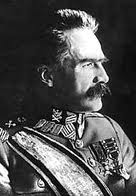
Marshal Jozef Pilsudski - Famous Polish Quotation

To be defeated and not submit, is victory;
to be victorious and rest on one's laurels, is defeat.
Jozef Pilsudski


Leopold Okulicki - Famous Polish Quotation


 In comparison with the NKVD,
the Gestapo methods
are child's play.  
 Leopold Okulicki


Irena Sendler - Famous Polish Quotation


Every child saved with my help and the help of all the wonderful secret messengers, who today are no longer living, is the justification of my existence on this earth, and not a title to glory.          Irena Sendler


Karol Wojtyla - Pope John Paul II - Famous Polish Quotation


Freedom consists not in doing what we like, but in having the right to do what we ought.
  Pope John Paul II


I belong to a nation which over the past centuries has experienced many hardships and reverses. The world reacted with silence or with mere sympathy when Polish frontiers were crossed by invading armies and the sovereign state had to succumb to brutal force.
 Lech Walesa


Zbigniew BrzezinskiBut if Russia is to be part of this larger zone of peace it cannot bring into it its imperial baggage. It cannot bring into it a policy of genocide against the Chechens, and cannot kill journalists, and it cannot repress the mass media.       Zbigniew Brzezinski


Polish General Kazimierz Sosnkowski Warsaw is not waiting for empty words of praise, for expressions of recognition, not for assurances of sympathy. Warsaw is waiting … Warsaw is waiting … for weapons and ammunition.  
  General Kazimierz Sosnkowski


Polish General Stanislaw Maczek

Polish soldiers fight 
for freedom
of other nations 
but dies only
 for Poland. 
General Stanislaw Maczek 


Comrades, I took the red tram of socialism to the stop named Independence, but that's where I got off.
Jozef Pilsudski


This homage has been rendered not to me - for the Polish soil is fertile and does not lack better writers than me - but to the Polish achievement, the Polish genius.         
Henryk Sienkiewicz 


Marek Belka - Famous Polish QuotationThe Holocaust committed by the Nazis turned this country, where most of the European Jews used to live and where their culture used to flourish, into a massive grave. This is why initiatives to revive Jewish culture in Poland is so important.
  Marek Belka


Ludzi coraz więcej, a człowieka coraz mniej -  

There is more and more people in the world, but less and less humanity.
          Edward Stachura


It has been said that Poland is dead, exhausted, enslaved, but here is the proof of her life and triumph. 
 Henryk Sienkiewicz


Bronislaw Geremek

It is often said that Poland is a country where there is anti-semitism and no Jews, which is pathology in its purest state.  Bronislaw Geremek


May God permit us both
to return to a free 
and independent
Poland.
General Wladyslaw Anders


Jan Karski - Famous Polish Quotations


But I am a Christian Jew. I am a practicing Catholic. Although I am not a heretic, still my faith tells me the second original sin has been committed by humanity: through commission, or omission, or self-imposed ignorance, or insensitivity, or self-interest, or hypocrisy, or heartless rationalization....This sin will haunt humanity to the end of time. It does haunt me. And I want it to be so.      Jan Karski 


My most ardent desire is that my country will recapture its historic opportunity for a peaceful evolution and that Poland will prove to the world that even the most complex situations can be solved by a dialogue and not by force.    Lech Walesa


Witold Pilecki - Famous Polish Quotations 
During the first 3 years
at Auschwitz, 
2 million people died; 
over the next 2 years -
3 million.   Witold Pilecki


President Aleksander Kwasniewski 


So I think that I can say, as the President of Poland, we're proud that I am coming from Poland, which is different and what's more important, much better than before. President Aleksander Kwasniewski


There is a fundamental difference between the Polish experience of the state and the Russian experience.  In the Polish experience, the state was always a foreign power. So, to hate the state was a patriotic act.    Ryszard Kapuscinski


Richard Edgar Pipes - Famous Polish Quotations


[Lenin was] merely a psychopath to whom ideas barely mattered and whose only motivation is to dominate and to kill.        Richard  Edgar Pipes 


Copernicus portrait - Famous Polish Quotation
To know that we know what we know, and to know that we do not know what we do not know, that is true knowledge.  Copernicus 


Stanislaw Jerzy Lec - Famous Polish Quotation

The weakest link in the chain is also the strongest. It can break the chain.  Stanislaw Jerzy Lec


Adam Michnik - Famous Polish Quotation


Poland is an ally of the United States of America.  It was our duty to show that we are a reliable, loyal and predictable ally.  America needed our help, and we had to give it.  Adam Michnik


Andrzej Wajda - Famous Polish Quotation 
We expected that people were just waiting for the collapse of the Soviet Union, or at least for its retreat, and they were going to be full of initiative in all areas of life - in culture, in economy and in politics.  Andrzej Wajda


Jozef Wadecki - Famous Polish Quotation

I did the following routine during practice:
round off, whip, whip, whip, whip, whip, flip, double back straight 
with four twists.
Jozef Wadecki


Radek Sikorski - Foreign Minister- Poland - Famous Polish Quotation

When the world is shifting and new competitors arise, standing still is not sufficient. Institutions and procedures that have worked in the past are not enough. Incremental change is not enough. You have to adapt fast enough even to retain your position.  
Mr. Radek Sikorski (Foreign Minister of Poland)


In a democracy, one does not know what the next government will be like. Under fascism there is no next government.    
        Michal Kalecki


It is not so important what I did or how I did it but what is between the notes. That is what matters.  Pope John Paul II said at the beatification of Fra Angelico, "his belief became art, which in turn became faith. The art became a prayer.  You don't have to have a strong belief to make religious art but art and faith follow similar paths.     Henryk Gorecki


All the common people kissed my hands, my feet, my clothes; others only touched me, saying, 'Ah, let us kiss so valiant a hand!

King John III Sobieski (an excerpt from a letter written to his wife, after victory in the Battle of Vienna)


Joseph Conrad  - Famous Polish Quotation


He who wants to persuade should put his trust not in the right argument, but in the right word.  The power of sound has always been greater than the power of sense.     Joseph Conrad


The difference between western and eastern intellectuals is that the former have not been kicked in the ass enough.   Witold Gombrowicz


The Pole listening to Chopin listens to the voice of his whole race.   Ignace Paderewski


All my life through, the new sights of Nature made me rejoice like a child.  Marie Sklodowska (Curie)


Normal love isn't interesting. I assure you that it's incredibly boring.   
Roman Polanski


There are no miracles. There is only what one does oneself,"   Read more at Suite101: Tamara de Lempicka - The Life of an Artist | Suite101.com http://suite101.com/article/tamara-de-lempicka-the-life-of-an-artist-a346971#ixzz20dUCjuA4 


There are no miracles.
There is only what one does oneself.
Tamara de Lempicka


I am the master! I stretch forth my hands, even to the skies! I lay my hands upon the stars, as on the crystal wheels of the harmonica. Now fast, now slow, as my soul wills, I turn the stars. I weave them into rainbows, harmonies. I feel immortality! I create immortality!  
             Adam Mickiewicz


Wladyslaw Stanislaw Reymont - Famous Polish Quotation 
It is only our exactions of life that are terrible. It is only our impossible conceptions of beauty and good and justice that are terrible--because they never are realized, and at the same time they prevent us taking life as it is. That is the real source of all our sorrow and suffering.  
Wladyslaw Stanislaw Reymont


We have to oppose the widespread view that if the Russians are provoking us, we shouldn`t react because that could be perceived as a confirmation of Poland`s alleged Russophobia.  Let`s remember that Russia is not only provoking us but also checking how far it can go.  Recently, it went definitely too far.  We must react when we have to do with obvious nonsense, like the Russian foreign ministry`s recent statement that Yalta resulted in a strong, free, and democratic Poland.  President Lech Kaczynski


Polish President Lech Kaczynski - Famous Polish Quotation
President Lech Kaczynski
December 23, 2005 to April 10, 2010