Showing posts with label Pilsudski. Show all posts

September 26, 2018

SEPTEMBER 26 - DAILY CHRONICLES OF HISTORY

SEPTEMBER 26

1908

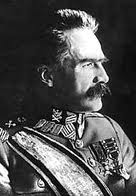
Bezdany raid by Polish revolutionaries:  The Bezdany raid was a train robbery on a Russian Empire passenger train near Bezdany near Vilna, and was considered the most daring and successful train robberies in Eastern Europe. The robbery was led Jozef Pilsudski, Poland's future national hero and dictator. The robbery garnered about 200,000 Russian rubles, which under the gold standard would be equivalent to 5,000 ounces of gold  ( in 1908 it would have been valued at $100,000; or , in 2012, would be valued at 8 million dollars, a veritable fortune in contemporary times.)  Pilsudski intended to use those funds to finance his secret military organization, though originally it was earmarked for the construction of a tram system in Vilnius. 


1938

In the midst of the Sudetenland crisis, Hitler made the speech in Berlin announcing that he had assured the British Prime Minister that when the Czechoslovakian problem had been settled, that there would be no more territorial demands by Germany in Europe.  (However, an OKW directive had later been issued to German forces (on November 24, 1938 ) ordering them to prepare for an attack on the Free City of Danzig. The directive read as follows: " The fuehrer has ordered (that) preparations are also to be made to enable the Free State of Danzig to be occupied by German troops by surprise"


1939

The French Communist Party was banned.  After its declaration of war on Germany, the French Government denounced the French Communist Party (PCF). Initially, the PCF confirmed its commitment to national defense, but changed its position after Comintern announced that the declaration of war was considered "imperialist".  Subsequently officials of the PCF signed a petition calling for peace, and expounded favorably of Hitler's peace proposals. The French government issued a decree that the manifestation of any communist propaganda would be punishable by the death penalty.  The Comintern ordered the PCF leadership to evacuate to Belgium,  while Maurice Thorez (leader of PCF) escaped to Moscow to evade prosecution.  All Communist-led local parties and organizations were dissolved,  communist trade unionists were suppressed, as well as communist newspapers. The PCF continued to exist albeit as an underground organization.


1942

Nazi Memorandum:  The August Frank memorandum was issued on September 26, 1942 by August Frank, SS Lieutenant General of the SS concentration camp administrative department  (SS-WVHA). It outlined detailed plans to carry out the "Final Solution", that is the extermination of the Jewish people, and the systematic confiscation of every item in their possession, including cash, jewelry,furs, gold teeth, watches, fountain pens, razors, scissors, flashlights, wallets, purses, clothing, underwear, footwear (of men, women and children), blankets, umbrellas, walking sticks, glasses, mirrors, belts, forks, knives, spoons, suitcases, combs, bed sheets, towels, and lastly - hair, which was shaved off the Jewish victims before they were gassed to death. The August Frank Memorandum, translated to English, was used as evidence during the Nuremberg Military Tribunal in the Trials of War Criminals.  Despite the evidence, Frank claimed that he had no knowledge that the Jews were being mass murdered.  He was tried and convicted of crimes against humanity. On November  3,1947 he was sentenced to life in prison by the tribunal which made the following declaration:  "...August Frank: this Tribunal has adjudged you guilty under counts two, three, and four of the indictment filed in this case. For the crimes of which you have thus been convicted, this Tribunal sentences you to imprisonment for the remainder of your natural life, at such place of confinement as shall be determined by competent authority...."  But in 1951 his sentence was commuted to 15 years.  The tribunal decided that Frank was criminally responsible for the slave labor program and the looting of Jewish property, but not liable for the murders of the Jews.  He died in Germany in 1984.


1944

Germans recaptured Mokotow district.  In the early morning, the Germans continued a massive assault on all fronts throughout Warsaw. (The previous day was the heaviest bombardment by the Germans backed with artillery and 1,200 aircraft. The Poles referred to it as Black Monday. ) On this day western parts of the city were attacked by five German divisions of the 10th, 18th, 19th, 31st and 46th while four German divisions of the 11th, 32nd, 61st and 217th attacked the eastern parts of the city. There were 70 batteries of field artillery, 80 batteries of heavy artillery and two entire air fleets (1st and 4th). Warsaw was bombarded relentlessly resulting in very high civilian casualties.  On September 26, 1944, the Germans captured the Forts of Mokotów, Dąbrowski and Czerniaków.  On the same day, Juliusz Rommel, Polish Army General, began capitulation talks with the German commander. On September 28, at 12:00 they signed an agreement for a cease-fire. Warsaw officially capitulated. Despite this outcome, some Polish units refused to lay down their arms and cease fire, though they were personally commanded to do so by Polish Generals Czuma and Rommel.


September 17, 2012

SOVIET INVASION OF POLAND: LEGACY OF CURZON LINE


On 17th September 1939, over 800,000 Soviet troops swarmed across Poland's eastern border, comprising 33 divisions, 11 brigades, armed with 4,959 guns, 4,736 tanks, and supported by 3,300 aircraft. Sixteen days earlier the Germans had invaded Poland from the north, west and south. Polish troops fought courageously and were considered a formidable force to contend with, however they were vastly overwhelmed by German fire power. Polish Command ordered all units to head for the south-eastern part of Poland (the Kresy) where they could regroup and reinforce their defensive positions in anticipation of Anglo-French assistance. No help came. The Polish armies were alone and caught in a pincer. Their only option was immediate evacuation to France through Romania and Hungary.

The Kresy was annexed by the Red Army. Over 230,000 Polish soldiers were captured and interned in Soviet POW camps. About 13.5 million Polish were made citizens of the Soviet Union, a harbinger of the brutal "sovietization" policies yet to be unleashed. In the period from 1939 to 1941 hundreds of thousands of Polish citizens - soldiers and civilians, were deported to the far reaches of the Gulag. Many were executed, including the 16,000 Polish officers who were systematically murdered in the forests of Smolensk by the Soviet NKVD - it was the Katyn Massacres.

Just days before the outbreak of World War Two, a Non-aggression Pact, also referred to as the Molotov-Ribbentrop Pact, was signed between Germany and the Soviet Union. It contained a secret protocol that established a line along which Poland would be partitioned for the fourth time in her history.   It was called the Curzon Line.

Lord Curzon of Kedleston 1914 - oil on canvas by the American artist John Singer Sargent Courtesy of the Royal Geographical Society London.
Lord Curzon
The Curzon Line was established after the close of the first Great War. In 1918, after 123 years of oblivion, the Polish State was recreated according to the Fourteen Points laid down by US President Woodrow Wilson, which specified that "an independent Polish state should be erected which should include the territories inhabited by indisputably Polish populations, which should be assured a free and secure access to the sea..."  
   
The Commission of Polish Affairs was appointed by the Allied Supreme Council to make recommendations on the matter of drawing a demarcation, or armistice line separating Poland from her Bolshevik neighbour to the east.  
 

Third Partition of Poland 1795


The British decided that the line should be based loosely on the last version of Poland's border, that is the border between the Prussian Kingdom and the Russian Empire following the third partition of Poland in 1795. Hence the Second Polish Republic was reborn from territories formerly occupied by the Russian Empire, the Austro-Hungarian Empire and the German Empire.  However,  the 1919 Treaty of Versailles did not deal with the subject of Poland's eastern borders. Article 87 stipulated that "the boundaries of Poland not laid down in the present Treaty will be subsequently determined by the Principal Allied and Associated Powers."


Neither Poland nor Russia was willing to accept the Curzon Line as long as military fortunes weighed in their favor. Just months before the Treaty of Versailles was signed, the Polish-Russian War erupted over territorial claims to the Ukraine and Belarus. Poland's Marshal Jozef Pilsudski, the Father of Poland, envisaged a Polish-led Intermarum, in which a federation consisting of Eastern and Central European states would be a formidable barrier to a possible resurgence of German and Russian imperialist ambitions. Pilsudski's objective was to expand the Polish border as far east as possible. Lenin's vision was to spread his communist revolution throughout Europe, using Poland as the springboard.

L-R Jozef Pilsudski and Edward Smigly-Rydz -  Polish Russian War 1920

By 1919, Polish armed forces had taken much of Western Ukraine and by May 1920 the Poles had captured Kiev. A counteroffensive by the Soviets in July prompted the Polish Prime Minister Wladyslaw Grabski to call upon the Allies for military assistance. But instead, the Allies put considerable pressure on Grabski to withdraw his troops back to the 1919 version of the line, and to an armistice in Galicia. On July 11, 1920 Lord Curzon dispatched a telegram to the Bolshevik government in which he proposed that a ceasefire be agreed to along the 1919 line. Henceforth the line was referred to as the Curzon Line.  Irregardless, the Polish government refused to accept these terms on the grounds that the Allies had reneged on their promise to provide military support to Polish armed forces.

In March 1921 the Polish-Russian War ended with a Polish victory. Under the terms agreed upon in the Treaty of Riga, Russia ceded a vast amount of territory to Poland; approximately 135,000 square km (or 52,000 square miles) of land to the east, which surpassed the Curzon line by a distance of 250 km. Lithuania was partitioned between Poland and Lithuania, resulting in two versions of the southern part of the Curzon Line (see Part A and Part B of the following map). The Treaty included a significant part of the Vilna Governorate and the city of Wilno, as well as East Galicia, including the city of Lviv, and most of the region of Volhynia.


Curzon Line Map of Poland Before and After WW2
Map created by Radek, S

Explanation of Map:The Curzon Line is indicated by the light blue line"B" which was established in 1919. Line "A" is the darker blue line as established by Stalin in 1940.


The Treaty of Riga was ratified by the Polish government on April 15th, and by the Soviet Russian government on April 22nd, and took legal force when documents were exchanged in Minsk on April 30th.  Furthermore, it was registered in the League of Nations Treaty Series of August 1921. However the Allies were unwilling to recognize the legitimacy of the Treaty, perhaps due to the fact that the Brits were not included in the deliberations. It was only through the support of the French government that Great Britain, the US, Italy and Japan finally followed suit and conceded recognition of the Treaty in March 1923.


Polish Russian Signing of the Treaty of Riga 1921 after Polish Russian War
Polish Russian Signing of the Treaty of Riga 1921


Following the German invasion of Poland,  Soviet foreign minister Vyacheslav Molotov issued a declaration of war against Poland on September 17, 1939,as per the following:

The Polish-German War has revealed the internal bankruptcy of the Polish State. During the course of ten days' hostilities Poland has lost all her industrial areas and cultural centres. Warsaw, as the capital of Poland, no longer exists. The Polish Government has disintegrated, and no longer shows any sign of life. This means that the Polish State and its Government have, in point of fact, ceased to exist. In the same way, the Agreements concluded between the U.S.S.R. and Poland have ceased to operate. Left to her own devices and bereft of leadership, Poland has become a suitable field for all manner of hazards and surprises, which may constitute a threat to the U.S.S.R. For these reasons the Soviet Government, who has hitherto been neutral, cannot any longer preserve a neutral attitude towards these facts.

The Soviet Government also cannot view with indifference the fact that the kindred Ukrainian and White Russian people, who live on Polish territory and who are at the mercy of fate, should be left defenceless.

In these circumstances, the Soviet Government have directed the High Command of the Red Army to order troops to cross the frontier and to take under their protection the life and property of the population of Western Ukraine and Western White Russia.

At the same time the Soviet Government propose to take all measures to extricate the Polish people from the unfortunate war into which they were dragged by their unwise leaders, and enable them to live a peaceful life.


People's Commissar for Foreign Affairs of the U.S.S.R. V. Molotov


Needless to say, Molotov's declaration was merely a ruse - an invention to portray the Soviet army as so-called "liberators".  Of course, it was nothing of the kind.  The Red Army invaded Poland along two fronts: the Belarussian Front was invaded by troops under the command of Comandarm 2nd rank Mikhail Kovalyov, and the Ukrainian Front was invaded by troops led by Comandarm 1st rank Semyon Timoshenko.  German-Soviet collaboration was visibly evident. 


German Soviet collaboration invasion of Poland September 1939
German and Soviet Officers congratulate each other
As the Red Army advanced westward, they invariably encountered German troops headed eastward.  In fact the German command, having captured Brest Fortress on September 17th, transferred its control over to the Soviet 29th Tank Brigade. Days later there was a German-Soviet parade in the town.  Lwow was surrounded by German troops on September 14th, and by the 22nd of September the city surrendered to the Soviets.  Other Polish cities fell to Soviet control - Wilno was taken on September 19th after battling the enemies for two days - then Grodno succumbed to defeat on September 24th after a courageous four-day battle.  By the end of September the Red Army had reached its intended destination - the line formed by the Narew, Western Bug, Vistula and San Rivers.  It was the border specified in the Molotov-Ribbentrop Pact.  


Map of German Soviet partition of Poland Sept 28 1939 Molotov-Ribbentrop_Pact

On September 28, 1939, the Germans and Russians modified the Curzon Line so that the  northern part of the border was dramatically shifted towards the west, encompassing the city of Bialystock and its environs under the sphere of Soviet Control.  The map illustrated above was signed by Stalin and Ribbentrop.

The Curzon Line was a recurring topic of discussion during the deliberations at Teheran and Yalta Conference.  Despite British protests, Stalin belabored the issue at every opportunity and demanded that the Curzon Line be established as Poland's eastern border.  However, it was fait accompli. The Russians had already established control in Poland, and installed a puppet government.  Churchill attempted to retain a section of East Galicia and the city of Lwow, but to no avail.  Stalin argued that it was Lord Curzon who came up with the idea of the demarcation line, and he believed that the Soviets could not be expected to settle for anything less.  Furthermore, Stalin frequently brought up the subject of ethnography of the region in an effort to validate the Curzon Line,  and claimed that Poles did not represent the majority in the territories of the Ukraine and Lithuania. But in some areas, including the cities of Bialystock, Grodno, Lwow and Wilno there was a clear Polish majority. After the deportations, however, the Polish population (Poles and Jews) declined significantly. 


Map Polish Census 1931 Mother Tongue - Curzon Line


The Polish government-in-exile was strongly opposed to the Curzon Line, but was not informed that eastern Poland had already been handed over to Stalin.  Polish Prime Minister Stanislaw Mikolajczyk continued to pressure the Allies to persuade Stalin to reconsider. But it was already fait accompli.  The British refused to deal with the matter, preferring instead to appease Stalin, not wanting to upset him.

Though the Allies claim to have won the war,  the real victor was Stalinist Russia.  Despite attempts by Western diplomacy to achieve a real peace, Churchill and Roosevelt gave in to each of Stalin's demands, which condemned eastern Europe including Poland to languish behind the Iron Curtain for decades.

The Curzon line has been the eastern border of Poland since July 1945. But its legacy continues. Even after the dissolution of Soviet Union, the Curzon line still remains unchanged, but with some variation. Poland now shares its eastern border with Lithuania, Belarus, and the Ukraine.


Map of present-day Poland


July 15, 2012

FAMOUS POLISH QUOTATIONS

Great men and women throughout history are remembered for their magnificent oratory, probably much more so than for their valiant, or infamous deeds. Quotations have always captured our attention and fascination. They exquisitely encapsulate in a few words the scope of human understanding, thoughts and ideas and is a skill that is almost tantamount to wizardry. Who among us does not instantly recognize the following quotations, words which will endure for posterity.  Neither shall we forget their names for they have been written into our collective consciousness.


We shall not flag or fail. We shall go on to the end. We shall fight in France, we shall fight on the seas and oceans, we shall fight with growing confidence and growing strength in the air, we shall defend our island, whatever the cost may be. We shall fight on the beaches, we shall fight on the landing grounds, we shall fight in the fields and in the streets, we shall fight in the hills: we shall never surrender.

Let the word go forth from this time and place, to friend and foe alike, that the torch has been passed to a new generation of Americans - born in this century, tempered by war, disciplined by a hard and bitter peace.

Be not afraid.


These are inspiring words but there remain a treasure chest of many other great quotations which have yet to capture our attention. The following are a collection of Polish quotations which I have gathered laboriously from countless sources, from famous writers, musicians, and film makers. I would have included many more, but unfortunately many quotes have not been translated to English. These quotations serve to inspire, amaze, educate, liberate, and sometimes, even amuse. The best quotations, I believe, are those which captured the sentiments of a nation in one moment of history, and thus preserved it for all time. Quotations are the signposts of our society - the good ones inspire us to become better than ourselves, while the bad ones alert us to danger, or alas, lead us astray. In any event quotations invite us to delve deeper to explore its meaning, and to understand its past. That is the mission.


Marshal Jozef Pilsudski - Famous Polish Quotation

To be defeated and not submit, is victory;
to be victorious and rest on one's laurels, is defeat.
Jozef Pilsudski


Leopold Okulicki - Famous Polish Quotation


 In comparison with the NKVD,
the Gestapo methods
are child's play.  
 Leopold Okulicki


Irena Sendler - Famous Polish Quotation


Every child saved with my help and the help of all the wonderful secret messengers, who today are no longer living, is the justification of my existence on this earth, and not a title to glory.          Irena Sendler


Karol Wojtyla - Pope John Paul II - Famous Polish Quotation


Freedom consists not in doing what we like, but in having the right to do what we ought.
  Pope John Paul II


I belong to a nation which over the past centuries has experienced many hardships and reverses. The world reacted with silence or with mere sympathy when Polish frontiers were crossed by invading armies and the sovereign state had to succumb to brutal force.
 Lech Walesa


Zbigniew BrzezinskiBut if Russia is to be part of this larger zone of peace it cannot bring into it its imperial baggage. It cannot bring into it a policy of genocide against the Chechens, and cannot kill journalists, and it cannot repress the mass media.       Zbigniew Brzezinski


Polish General Kazimierz Sosnkowski Warsaw is not waiting for empty words of praise, for expressions of recognition, not for assurances of sympathy. Warsaw is waiting … Warsaw is waiting … for weapons and ammunition.  
  General Kazimierz Sosnkowski


Polish General Stanislaw Maczek

Polish soldiers fight 
for freedom
of other nations 
but dies only
 for Poland. 
General Stanislaw Maczek 


Comrades, I took the red tram of socialism to the stop named Independence, but that's where I got off.
Jozef Pilsudski


This homage has been rendered not to me - for the Polish soil is fertile and does not lack better writers than me - but to the Polish achievement, the Polish genius.         
Henryk Sienkiewicz 


Marek Belka - Famous Polish QuotationThe Holocaust committed by the Nazis turned this country, where most of the European Jews used to live and where their culture used to flourish, into a massive grave. This is why initiatives to revive Jewish culture in Poland is so important.
  Marek Belka


Ludzi coraz więcej, a człowieka coraz mniej -  

There is more and more people in the world, but less and less humanity.
          Edward Stachura


It has been said that Poland is dead, exhausted, enslaved, but here is the proof of her life and triumph. 
 Henryk Sienkiewicz


Bronislaw Geremek

It is often said that Poland is a country where there is anti-semitism and no Jews, which is pathology in its purest state.  Bronislaw Geremek


May God permit us both
to return to a free 
and independent
Poland.
General Wladyslaw Anders


Jan Karski - Famous Polish Quotations


But I am a Christian Jew. I am a practicing Catholic. Although I am not a heretic, still my faith tells me the second original sin has been committed by humanity: through commission, or omission, or self-imposed ignorance, or insensitivity, or self-interest, or hypocrisy, or heartless rationalization....This sin will haunt humanity to the end of time. It does haunt me. And I want it to be so.      Jan Karski 


My most ardent desire is that my country will recapture its historic opportunity for a peaceful evolution and that Poland will prove to the world that even the most complex situations can be solved by a dialogue and not by force.    Lech Walesa


Witold Pilecki - Famous Polish Quotations 
During the first 3 years
at Auschwitz, 
2 million people died; 
over the next 2 years -
3 million.   Witold Pilecki


President Aleksander Kwasniewski 


So I think that I can say, as the President of Poland, we're proud that I am coming from Poland, which is different and what's more important, much better than before. President Aleksander Kwasniewski


There is a fundamental difference between the Polish experience of the state and the Russian experience.  In the Polish experience, the state was always a foreign power. So, to hate the state was a patriotic act.    Ryszard Kapuscinski


Richard Edgar Pipes - Famous Polish Quotations


[Lenin was] merely a psychopath to whom ideas barely mattered and whose only motivation is to dominate and to kill.        Richard  Edgar Pipes 


Copernicus portrait - Famous Polish Quotation
To know that we know what we know, and to know that we do not know what we do not know, that is true knowledge.  Copernicus 


Stanislaw Jerzy Lec - Famous Polish Quotation

The weakest link in the chain is also the strongest. It can break the chain.  Stanislaw Jerzy Lec


Adam Michnik - Famous Polish Quotation


Poland is an ally of the United States of America.  It was our duty to show that we are a reliable, loyal and predictable ally.  America needed our help, and we had to give it.  Adam Michnik


Andrzej Wajda - Famous Polish Quotation 
We expected that people were just waiting for the collapse of the Soviet Union, or at least for its retreat, and they were going to be full of initiative in all areas of life - in culture, in economy and in politics.  Andrzej Wajda


Jozef Wadecki - Famous Polish Quotation

I did the following routine during practice:
round off, whip, whip, whip, whip, whip, flip, double back straight 
with four twists.
Jozef Wadecki


Radek Sikorski - Foreign Minister- Poland - Famous Polish Quotation

When the world is shifting and new competitors arise, standing still is not sufficient. Institutions and procedures that have worked in the past are not enough. Incremental change is not enough. You have to adapt fast enough even to retain your position.  
Mr. Radek Sikorski (Foreign Minister of Poland)


In a democracy, one does not know what the next government will be like. Under fascism there is no next government.    
        Michal Kalecki


It is not so important what I did or how I did it but what is between the notes. That is what matters.  Pope John Paul II said at the beatification of Fra Angelico, "his belief became art, which in turn became faith. The art became a prayer.  You don't have to have a strong belief to make religious art but art and faith follow similar paths.     Henryk Gorecki


All the common people kissed my hands, my feet, my clothes; others only touched me, saying, 'Ah, let us kiss so valiant a hand!

King John III Sobieski (an excerpt from a letter written to his wife, after victory in the Battle of Vienna)


Joseph Conrad  - Famous Polish Quotation


He who wants to persuade should put his trust not in the right argument, but in the right word.  The power of sound has always been greater than the power of sense.     Joseph Conrad


The difference between western and eastern intellectuals is that the former have not been kicked in the ass enough.   Witold Gombrowicz


The Pole listening to Chopin listens to the voice of his whole race.   Ignace Paderewski


All my life through, the new sights of Nature made me rejoice like a child.  Marie Sklodowska (Curie)


Normal love isn't interesting. I assure you that it's incredibly boring.   
Roman Polanski


There are no miracles. There is only what one does oneself,"   Read more at Suite101: Tamara de Lempicka - The Life of an Artist | Suite101.com http://suite101.com/article/tamara-de-lempicka-the-life-of-an-artist-a346971#ixzz20dUCjuA4 


There are no miracles.
There is only what one does oneself.
Tamara de Lempicka


I am the master! I stretch forth my hands, even to the skies! I lay my hands upon the stars, as on the crystal wheels of the harmonica. Now fast, now slow, as my soul wills, I turn the stars. I weave them into rainbows, harmonies. I feel immortality! I create immortality!  
             Adam Mickiewicz


Wladyslaw Stanislaw Reymont - Famous Polish Quotation 
It is only our exactions of life that are terrible. It is only our impossible conceptions of beauty and good and justice that are terrible--because they never are realized, and at the same time they prevent us taking life as it is. That is the real source of all our sorrow and suffering.  
Wladyslaw Stanislaw Reymont


We have to oppose the widespread view that if the Russians are provoking us, we shouldn`t react because that could be perceived as a confirmation of Poland`s alleged Russophobia.  Let`s remember that Russia is not only provoking us but also checking how far it can go.  Recently, it went definitely too far.  We must react when we have to do with obvious nonsense, like the Russian foreign ministry`s recent statement that Yalta resulted in a strong, free, and democratic Poland.  President Lech Kaczynski


Polish President Lech Kaczynski - Famous Polish Quotation
President Lech Kaczynski
December 23, 2005 to April 10, 2010